🇬🇧 Chips of the United Kingdom
41 chips from the United Kingdom, best known first.
Silicon Glen is the nickname for Scotland's high technology sector, centred on the Central Belt between Dundee, Inverclyde and Edinburgh. It grew from electronics assembly into a major semiconductor and computing region, then contracted sharply after 2000 before rebuilding around design, software and services.
- Glenrothes hosted diodes, MOS research, a fab and photomask supply from 1960
- Motorola's East Kilbride semiconductor plant employed 4,000 people
- Digital's South Queensferry plant cost $200 million and made the Alpha 21064
- At its peak the region made about 30% of Europe's PCs and 80% of workstations
- Electronics employment fell from 48,000 in 2000 to 25,000 by 2004
Chips in the United Kingdom
Silicon Glen covers the triangle of the Scottish Central Belt running between Dundee, Inverclyde and Edinburgh, taking in Fife, Glasgow and Stirling, with electronics sites elsewhere in Scotland often counted too. The name echoes California's Silicon Valley and has been used since the 1980s, though it describes a broad region rather than a single valley. Electronics manufacturing for overseas parents shaped the early cluster, later joined by wafer fabrication, chip design and computing hardware. At its height the area turned out roughly 30% of Europe's PCs, 80% of its workstations and 65% of its cash machines, plus a notable share of its integrated circuits.
History
Ferranti opened a plant in Edinburgh in 1943, moving work out of wartime Manchester, and stayed on. Marconi and Barr & Stroud followed in defence electronics, then US firms arrived: Honeywell, NCR in Dundee, and IBM, which chose the region in 1951 and opened at Greenock in 1953. Much of this early activity was factory production for foreign owners rather than home-grown research. Electronics also filled the gap left by shipbuilding and mining closures, since reskilling workers was fairly straightforward.
Companies
Hughes Aircraft, now Raytheon, set up outside the US for the first time at Glenrothes in 1960 to make germanium and silicon diodes. Elliott Automation added production there in 1965 and a MOS research lab in 1967. Wafer fabs followed in 1969: General Instrument at Glenrothes, Motorola at East Kilbride, National Semiconductor at Greenock, and Signetics at Linlithgow. Compugraphic supplied photomasks from Glenrothes from 1970. Others with plants included SGS, NEC, Burr-Brown, Seagate, Kymata and Micronas. Rodime of Glenrothes launched the 3.5 inch hard disk drive in 1983 and later licensed its patents widely.
Fabs and places
Glenrothes was the main semiconductor centre, hosting diode production, Elliott's MOS laboratory, General Instrument's fab and later Micronas, with Compugraphic making photomasks nearby. East Kilbride held Motorola's fab, which employed 4,000 staff, plus a mobile phone plant at Easter Inch. Greenock had National Semiconductor and IBM. Digital Equipment built a $200 million plant at South Queensferry in 1990 for the 64-bit Alpha 21064 and related chips; Motorola bought it in 1995 and later shut it. Sun Microsystems ran a large plant at Linlithgow. Signetics, SGS in Falkirk, and several firms in Livingston and Glasgow completed the network.
Policy and support
Public development agencies promoted electronics as a replacement for lost heavy industry jobs. Joining the European single market pushed US firms to manufacture inside the EEC so they could sit on standards committees and meet origin rules; from 1989 the location of the wafer diffusion stage decided where a chip counted as originating. Scottish universities provided a strong design base that supported the industry. More recently agencies have backed global services, software and home-grown firms, and Semefab, the old General Instrument foundry, became the UK's primary centre for MEMS and nanotechnology.
Today
The 2000 tech downturn hit hard. Viasystems, National Semiconductor, Motorola and Chunghwa Picture Tubes cut staff or closed plants; NEC's Livingston site and Motorola's Bathgate factory shut, Sun stopped making at Linlithgow in 2009, and NCR ended Dundee production. Employment fell from 48,000 in 2000 to 25,000 across 1,000 electronics firms in 2004. Recovery came through software and design: Rockstar North, Amazon's Edinburgh centre, Skyscanner and a semiconductor design community including Atmel, Freescale, Texas Instruments, Analog Devices and STMicroelectronics. A 2006 UBS report put Scotland top of UK regions for venture-backed firms per head.
The facts in this overview come from the Wikipedia article "Silicon Glen", written by its contributors and used under the CC BY-SA 4.0 licence. EveryChip rewrote the text in its own words, with AI assistance, and compares every page with the article to make sure no passage is copied. It may be reused under the same CC BY-SA 4.0 licence with a link back.
Chip hubs in the United Kingdom
 🇬🇧 United KingdomARM9
32-bit RISC processor core family for microcontrollersMicrocontroller · Arm · 1998
🇬🇧 United KingdomARM Cortex-A
Application processor cores for smartphones and laptopsCPU · Arm
 🇬🇧 United KingdomARM11
32-bit RISC processor core family by ARM HoldingsCPU · Arm · 2002
 🇬🇧 United KingdomARM Cortex-R
Real-time ARM processor cores for safety-critical systemsCPU · Arm · 2020
 🇬🇧 United KingdomARM Cortex-A9
32-bit multi-core processor core for mobile and embedded systemsCPU · Arm · 2007
 🇬🇧 United KingdomARM Cortex-A7
Power-efficient 32-bit ARM processor core for mobile and embedded systemsCPU · Arm · 2011
🇬🇧 United KingdomARM Cortex-A57
64-bit ARM CPU core for high-performance SoCsCPU · Arm · 2012
 🇬🇧 United KingdomARM Cortex-A72
64-bit ARM CPU core for mobile and embedded systemsCPU · Arm · 2015
 🇬🇧 United KingdomARM Cortex-A15
High-performance 32-bit ARM processor core for mobile and embedded systemsCPU · Arm · 2011
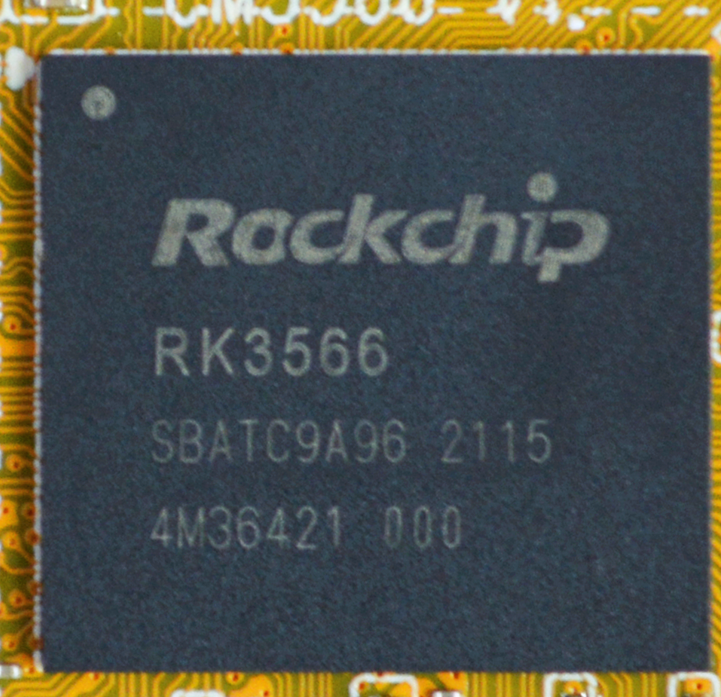 🇬🇧 United KingdomARM Cortex-A55
Efficient 64-bit CPU core for mobile and embedded systemsCPU · Arm · 2017
🇬🇧 United KingdomARM Cortex-A76
High-performance CPU core for mobile and laptop chipsCPU · Arm · 2018
🇬🇧 United KingdomAMULET
Asynchronous ARM microprocessor series from the University of ManchesterCPU · Arm · 1993
 🇬🇧 United KingdomVideoCore
Low-power mobile multimedia processor series by BroadcomGPU · Arm
 🇬🇧 United KingdomRP2350
Dual-core microcontroller with ARM and RISC-V coresMicrocontroller · Arm · 2024
 🇬🇧 United KingdomRP2040
Dual-core ARM Cortex-M0+ microcontroller by Raspberry PiMicrocontroller · Arm · 2021
 🇬🇧 United KingdomBig.LITTLE
Heterogeneous CPU architecture pairing efficient and powerful coresCPU · Arm · 2011
Photo credits on this page
The small pictures above come from Wikimedia Commons under free licences. Some are cropped to fit.
- Mali: Open Grid Scheduler / Grid Engine, CC0, source
- ARM9: Raimond Spekking, CC BY-SA 4.0, source
- ARM Cortex-R: Raimond Spekking, CC BY-SA 4.0, source
- ARM Cortex-A15: Arndaleboard.org, CC BY-SA 3.0, source
- ARM Cortex-A7: Raimond Spekking, CC BY-SA 4.0, source
- ARM Cortex-A72: Laserlicht, CC BY-SA 4.0, source
- ARM11: Raimond Spekking, CC BY-SA 4.0, source
- ARM Cortex-A9: Raimond Spekking, CC BY-SA 4.0, source
- VideoCore: Evan-Amos, Public domain, source
- RP2350: Profpcde, CC0, source
- ARM Cortex-A55: Dahlwoo, CC BY-SA 4.0, source
- RP2040: Phiarc, CC BY-SA 4.0, source