AI training and inference
Accelerators for training and running neural networks. 129 chips on EveryChip so far.
AI chips train neural networks and run them, a task called inference. Training a large language model takes thousands of accelerators running for weeks; inference runs every time someone uses the model. Nvidia's data centre GPUs have led since the deep-learning revival of 2012, while Google's TPU, AMD's Instinct, Amazon's Trainium and many start-up chips compete. Phones and laptops now carry small AI engines too.
Training and inference
Training adjusts billions of weights by passing data through the network and back, again and again, so it needs huge amounts of arithmetic and memory bandwidth and fast links between chips. Inference runs the finished model, often at lower precision, and is spread across data centres and devices. Many chip designs specialise in one or the other.
Why Nvidia led
In 2012 a neural network called AlexNet, trained on two Nvidia gaming GPUs, won the ImageNet image recognition contest by a wide margin. Nvidia's CUDA software, available since 2007, made its GPUs the default for researchers. Its A100 (2020), H100 (2022) and Blackwell (2024) chips became the main tools of the AI industry, and demand outran supply in 2023 and 2024.
Famous AI training and inference chips
Further reading
 🇬🇧 United KingdomSpiNNaker
Massively parallel neuromorphic supercomputer for brain simulationCPU · Arm · 2019
🇩🇪 GermanyAURIX
32-bit automotive microcontroller family by InfineonMicrocontroller · Other
🇺🇸 United StatesRubin
Nvidia GPU microarchitecture using HBM4 memory and 3 nm processGPU · GPU architecture · 2026
🇺🇸 United StatesCDNA
AMD microarchitecture for data centre GPU acceleratorsGPU · GPU architecture · 2020
🇺🇸 United StatesGP5
Analog co-processor for belief propagation and machine learning tasksAI accelerator · Other
 WorldGDDR7 SDRAM
High-bandwidth graphics memory standard for GPUs and computing.Memory · 2024
🇷🇺 RussiaELVEES Multicore
Russian 32-bit microprocessor and DSP series for space and industryCPU · Arm · 2004
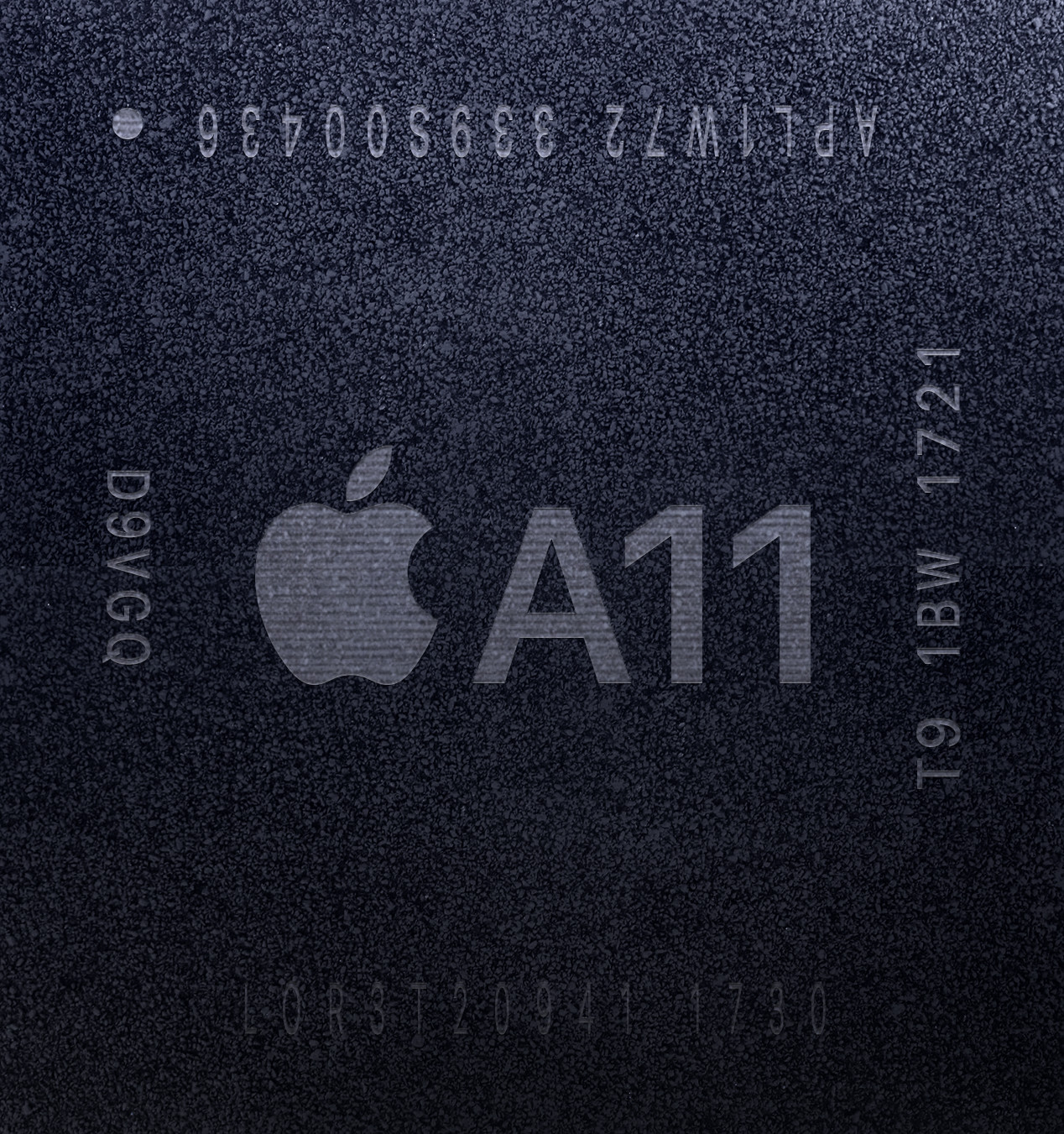 🇺🇸 United StatesApple A11 Bionic
Six-core phone SoC with a Neural Engine, used in iPhone 8 and iPhone XSoC · Arm · 2017
 🇺🇸 United StatesLarrabee
Cancelled Intel x86-based GPGPU project that became the Xeon Phi lineGPU · x86 · 2009
🇺🇸 United StatesAmpere
Nvidia's 2020 GPU architecture behind GeForce RTX 30 and the A100 acceleratorGPU · GPU architecture · 2020
🇺🇸 United StatesIBM Heron
156-qubit tunable-coupler quantum processor by IBMQuantum · Other · 2023
🇺🇸 United StatesVolta
Nvidia's 2017 GPU architecture, first with Tensor Cores for deep learning.GPU · GPU architecture · 2017
WorldMajorana 1
Microsoft quantum processor using topological superconductorsQuantum · Other · 2025
 🇺🇸 United StatesSycamore
Google's 53-qubit superconducting quantum processorQuantum · Other · 2019
 🇺🇸 United StatesTensor Processing Unit
Google custom chip for neural network machine learningAI accelerator · Other · 2015
 🇺🇸 United States and 2 moreMeteor Lake
Intel's first chiplet-based mobile Core Ultra processors, launched December 2023CPU · x86 · 2023
 🇺🇸 United States and 1 moreLunar Lake
Ultra-low power mobile SoC with on-package memory and an NPU for AI workCPU · x86 · 2024
 🇰🇷 South KoreaHigh Bandwidth Memory
Stacked memory interface for high-performance computing and graphics.Memory · 2013
 🇺🇸 United StatesGranite Rapids
Intel's high-performance server processor series for data centres.CPU · x86 · 2024
 🇺🇸 United StatesAMD Instinct
AMD's data centre GPU line for deep learning and HPCGPU · GPU architecture · 2017
🇺🇸 United StatesNvidia BlueField
Nvidia data processing units with their own CPU cores and memoryNetwork chip · Arm · 2020
 🇺🇸 United StatesGeForce RTX 20 series
First consumer GPUs with hardware ray tracingGPU · GPU architecture · 2018
 🇺🇸 United StatesPower10
IBM's 7 nm server CPU family for AI-heavy enterprise workloadsCPU · Power · 2021
🇺🇸 United StatesWillow
105-qubit superconducting quantum processor by Google Quantum AIQuantum · Other · 2024
 🇺🇸 United StatesApple M3
Apple's 3 nm Mac and iPad SoC family with CPU, GPU and Neural EngineSoC · Arm · 2023
 🇺🇸 United StatesHopper
Nvidia's datacentre GPU architecture, first shipping in the H100 acceleratorGPU · GPU architecture · 2022
 🇺🇸 United StatesTesla Dojo
Tesla's custom supercomputer and D1 chip for training self-driving vision modelsAI accelerator · RISC · 2023
 🇺🇸 United StatesIntel i860
First million-transistor RISC microprocessor by IntelCPU · RISC · 1989
🇬🇧 United KingdomRekursiv
A four-chip object-oriented CPU with a writable microcode instruction setCPU · Other · 1988
 🇺🇸 United StatesBlackwell
Nvidia's GPU architecture for AI datacentres and gaming, launched in 2024GPU · GPU architecture · 2024
 🇺🇸 United StatesGeForce RTX 50 series
Nvidia's Blackwell consumer graphics cards, from the RTX 5050 to the RTX 5090GPU · GPU architecture · 2025
WorldHexagon
A family of digital signal processors and neural processing units by Qualcomm.DSP · VLIW · 2006
 🇺🇸 United StatesXeon Phi
Intel's x86 manycore coprocessor family for supercomputers and HPCCPU · x86 · 2010
 🇺🇸 United StatesNvidia Tesla
Former brand for Nvidia general-purpose GPU computing cardsGPU · GPU architecture · 2007
🇺🇸 United StatesMAJC
Sun's multi-core VLIW microprocessor design built to run Java programsCPU · VLIW
🇺🇸 United StatesCooper Lake
Intel server CPU for four and eight socket systemsCPU · x86 · 2020
🇬🇧 United KingdomARM Cortex-X925
High-performance CPU core for mobile computingCPU · Arm · 2024
 🇺🇸 United StatesNvidia RTX Spark
ARM system on chip for Windows laptops and desktopsSoC · Arm · 2026
🇺🇸 United StatesFeynman
Nvidia GPU microarchitecture planned for 2028 releaseGPU · GPU architecture · 2028
 🇺🇸 United StatesPascal
Nvidia GPU microarchitecture for gaming and data centresGPU · GPU architecture · 2016
 🇺🇸 United StatesGeForce
Nvidia brand of graphics processing units for PC gaming and computing.GPU · GPU architecture · 1999
 🇺🇸 United StatesGeForce RTX 30 series
Nvidia Ampere GPUs for gaming and creationGPU · GPU architecture · 2020
 🇺🇸 United StatesRadeon RX 9000 series
Mainstream consumer graphics cards using RDNA 4 architectureGPU · GPU architecture · 2025
🇺🇸 United StatesPixel Visual Core
Google’s programmable image and vision processor for Pixel phonesSoC · Arm · 2017
 🇺🇸 United StatesNvidia Drive
System on a chip family for autonomous vehiclesSoC · Arm · 2015
🇹🇼 TaiwanDimensity 9300
All-Big-Core 5G smartphone system on a chipSoC · Arm · 2023
🇺🇸 United StatesIBM Spyre
AI accelerator chip for IBM Z mainframesAI accelerator · Other · 2024
🇺🇸 United StatesSohu
Transformer-specific AI accelerator chip by Etched.aiAI accelerator · Other
Photo credits on this page
The small pictures above come from Wikimedia Commons under free licences. Some are cropped to fit.
- Apple M1: Henriok, CC0, source
- AMD Instinct: Мой Компьютер, CC BY 3.0, source
- Meteor Lake: Fritzchens Fritz, CC0, source
- Power10: Henriok, CC0, source
- Intel i860: Konstantin Lanzet, CC BY-SA 3.0, source
- GeForce RTX 50 series: 极客湾Geekerwan, CC BY 3.0, source
- Lunar Lake: LaptopMedia, CC BY 3.0, source
- Granite Rapids: Intel Corporation, Public domain, source
- Tesla Dojo: Steve Jurvetson, CC BY 2.0, source
- Xeon Phi: Capitalistcakes, CC0, source
- Nvidia Tesla: division, CSIRO, CC BY 3.0, source
- Nvidia RTX Spark: Daniel Lu ( User:dllu ), CC BY-SA 4.0, source
- Pascal: Fritzchens Fritz, CC0, source
- GeForce: ZMASLO, CC BY 3.0, source
- GeForce RTX 30 series: PantheraLeo1359531, CC BY 4.0, source
- Radeon RX 9000 series: MoreThanTech Personality rights Personality rights Personality rights, CC BY 3.0, source
- SpiNNaker: Pabogdan, CC BY-SA 4.0, source
- GDDR7 SDRAM: 极客湾Geekerwan, CC BY 3.0, source
- Sycamore: Google ( https://www.youtube.com/channel/UCK8sQmJBp8GCxrOtXWBpyEA ), CC BY 3.0, source
- Tensor Processing Unit: Norman P. Jouppi, George Kurian, Sheng Li, Peter Ma, Rahul Nagarajan,, CC BY 4.0, source
- High Bandwidth Memory: Fritzchens Fritz, CC0, source
- Nvidia Drive: NVIDIA Taiwan, CC BY 2.0, source
- Hopper: 极客湾Geekerwan, CC BY 3.0, source
- Apple A11 Bionic: Henriok, CC0, source
- Blackwell: 极客湾Geekerwan, CC BY 3.0, source
- Larrabee: Intel, CC BY-SA 3.0, source
- GeForce RTX 20 series: 极客湾Geekerwan, CC BY 3.0, source