
Zilog Z8
Microcontroller architecture with extensive on-chip registers
Zilog introduced the Z8 microcontroller architecture in 1979. It features up to 4,096 fast on-chip registers and a modified Harvard design, distinguishing it from the Z80 while keeping similar assembly syntax.
- Introduced by Zilog in 1979
- Features up to 4,096 on-chip registers
- Uses modified Harvard architecture
- Supports 1 KB to 64 KB memory space
- Includes motor control and sensor variants
What it is
The Zilog Z8 is a microcontroller architecture first released by Zilog in 1979. It serves as the foundation for several product families, including the Z8 Encore! and eZ8 series. The design is notable for its large number of fast on-chip registers, which can function as accumulators, pointers, or general random-access memory. This architecture supports address spaces for code storage and data, making it suitable for various embedded applications. Unlike the Zilog Z80 processor, the Z8 uses a modified Harvard architecture, though it retains similar assembly language mnemonics.
How it came about
Zilog launched the original Z8 architecture in 1979. Over time, the company expanded the line to include modern variants such as the Z8 Encore!, eZ8 Encore!, eZ8 Encore! XP, and eZ8 Encore! MC. These newer families added features like flash memory, sensor integration, and motor control capabilities. The architecture was designed to offer a distinct alternative to contemporaries like the Intel 8051 and Microchip PIC families, providing a different approach to on-chip resource management through its extensive register file.
Inside the chip
The Z8 uses a modified non-strict Harvard architecture, which separates code and data paths. A key feature is the inclusion of up to 4,096 fast on-chip registers. These registers serve multiple roles, acting as accumulators, memory pointers, or standard RAM. The chip supports a 16-bit address space for storing code and constants in programmable read-only memory, read-only memory, or flash, ranging from 1 kibibyte to 64 kilobytes. A second 16-bit address space allows for larger applications. Peripherals include analog-to-digital converters, Serial Peripheral Interface channels, Inter-Integrated Circuit channels, and IrDA encoders. The instruction set shares syntax with other Zilog processors, using LD for load operations and DJNZ for loops.
How it was made
Zilog produces the Z8 family in various package types to suit different needs. Options range from 8 to 80 pins. Available packages include dual in-line package, Quad Flat No-leads package, small outline integrated circuit, Shrink Small-Outline Package, and low profile Quad Flat Package. The eZ8 Encore! series supports programming and debugging via a single pin serial communication interface. Development tools include Zilog Developer's Studio, which offers an assembler and a C89 compliant compiler for newer derivatives.
Where it went
The Z8 architecture targets embedded systems and industrial controls. Specific variants address distinct markets. The GP models serve general purpose needs, while the Low Voltage versions operate at voltages as low as 2V. The Encore! MC family is designed for motor control applications. The Encore! XP includes sensors for interactive devices. BASIC models contain an integrated interpreter and debugger in ROM, facilitating rapid development. ROMless and OTP models provide flexibility for custom firmware storage strategies.
Versions and family
The product line includes several distinct families. ROMless models lack integrated read-only memory, while ROM models include it. OTP versions use one-time programmable memory. The Encore! series integrates flash-based memory. The eZ8 Encore! XP adds sensor capabilities, and the eZ8 Encore! MC focuses on motor control. Competitors in the market include the Microchip Technology PIC family, Intel 8051 descendants, Motorola 68HC11, Hitachi H8, and Toshiba TLCS-870.
Why it matters
The Z8 established a niche in the microcontroller market by offering a high register count and Harvard architecture. It provided an alternative to von Neumann based designs like the Motorola 6800 and 6809. Its instruction set familiarity helped engineers transition from other Zilog products. The architecture continues to evolve through the eZ8 families, maintaining relevance in specialized embedded tasks such as motor control and sensor integration.

Questions people ask about Zilog Z8
How does the Z8 differ from the Z80?
The Z8 uses a modified Harvard architecture, whereas the Z80 uses a different design. Despite this technical difference, the Z8 retains similar assembly language syntax, such as using LD for load operations.
What is the main feature of the Z8 architecture?
Its most significant feature is the large number of fast on-chip registers, up to 4,096. These can be used as accumulators, pointers, or general random-access memory for efficient data handling.
What packages are available for Z8 chips?
Z8 chips come in versions with 8 to 80 pins. Package types include dual in-line, Quad Flat No-leads, small outline integrated circuit, Shrink Small-Outline, and low profile Quad Flat packages.
Can I program the Z8 in C?
Yes. Zilog Developer's Studio II, which targets the Z8 Encore! and newer derivatives, includes a free compiler that claims compliance with the ANSI C89 standard.
Good reading and sources
The facts on this page come from the Wikipedia article "Zilog Z8", written by its contributors and used under the CC BY-SA 4.0 licence, and from its Wikidata record (CC0). EveryChip rewrote the text in its own words, with AI assistance, and compares every page with the article to make sure no passage is copied. It may be reused under the same CC BY-SA 4.0 licence with a link back.
It may contain mistakes, and figures change over time. Nothing here is investment or buying advice. If something is wrong, tell us. Last refreshed 2026-11-14.
Like Zilog Z8
All microcontrollers 🇺🇸 United StatesPIC microcontroller
Microchip's long-running family of 8-bit to 32-bit microcontrollersMicrocontroller · MIPS · 1976
 🇺🇸 United StatesMSP430
A 16-bit mixed-signal microcontroller family designed for very low power use.Microcontroller · Other · 1992
 🇺🇸 United StatesATtiny
Compact 8-bit AVR microcontroller family for simple embedded tasksMicrocontroller · Other · 1999
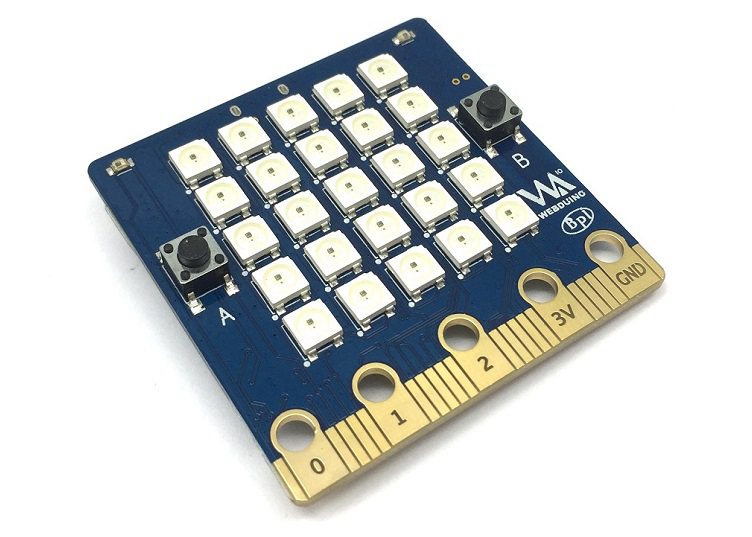 WorldBPI:Bit
ESP32-based single-board microcontroller with sensors and LED matrixMicrocontroller · Other · 2018
More from Zilog
All of them 🇺🇸 United StatesZilog Z8000
16-bit microprocessor family from Zilog, launched in 1979CPU · Other · 1979
 🇺🇸 United StatesZilog Z8001
A 16-bit microprocessor from Zilog, released in 1979 with a 23-bit address bus.CPU · Other · 1979
🇺🇸 United StatesZilog Z8000
A 16-bit microprocessor architecture from Zilog launched in 1979.CPU · Other · 1979
 🇺🇸 United StatesZilog Z80
An 8-bit microprocessor released in 1976 that became a staple of early personal computing and embedded systems.CPU · Other · 1976