Freescale RS08
Ultra-low-end 8-bit microcontroller series for embedded systems
The Freescale RS08 is a family of 8-bit microcontrollers released in 2006 by Freescale Semiconductor, now part of NXP. It serves as a simplified, cost-effective version of the S08 core, designed for small-memory embedded applications with minimal die size and low power consumption.
- Released in 2006 by Freescale Semiconductor
- Die size is 30% smaller than S08 core
- Smallest package is QFN6 at 3mm x 3mm x 1mm
- Uses von Neumann architecture with shared bus
- No hardware stack or interrupt vectors
What it is
The Freescale RS08 is a series of 8-bit microcontrollers introduced in 2006. Designed by Freescale Semiconductor, it targets ultra-low-end embedded applications where cost and size are critical. The architecture simplifies the earlier S08 design, removing complex features to reduce die size and price. These chips are suitable for simple control tasks in consumer electronics and industrial devices.
How it came about
Freescale launched the RS08 family in 2006 as a reduced-resource variant of its MC68HCS08 CPU. The goal was to create a more efficient core for small-memory parts. By stripping down the S08 architecture, engineers achieved a smaller die and lower production costs. This allowed the company to offer microcontrollers priced under one US dollar, expanding their reach into high-volume, cost-sensitive markets.
Inside the chip
The RS08 uses a von Neumann architecture, sharing program and data buses. It lacks a hardware stack, storing return addresses in a link register or local variables instead. Interrupts do not use vectors but wake the processor from low-power states, requiring software arbitration. Addressing modes include Short and Tiny types for efficient access to common variables. The core supports a single-wire Background Debug Mode for interactive control during development.
How it was made
However, the design focuses on minimizing die size, which is thirty percent smaller than the standard S08 core. The smallest package option is the QFN6, measuring three millimetres by three millimetres by one millimetre. This compact form factor supports the goal of high efficiency and cost-effectiveness for small-scale implementations.
Where it went
These microcontrollers are deployed in embedded systems requiring minimal processing power and memory. Typical applications include simple sensors, actuators, and low-cost consumer devices. The limited memory range, from one to twelve kilobytes of Flash, suits tasks with fixed, lightweight code. The ability to operate in low-power WAIT or STOP modes makes them useful for battery-powered Internet of Things nodes.
Versions and family
Several device variants existed by July 2010. The MC9RS08KA1 offers one kilobyte of Flash memory. The KA2 provides two kilobytes. The LE4 includes four kilobytes and a Serial Communications Interface. The LA8 expands to eight kilobytes with SPI support. The KB12 model features twelve kilobytes of Flash along with I2C and SCI peripherals. All share the same simplified RS08 core architecture.
Why it matters
The RS08 family demonstrated how simplifying an established architecture could open new market segments. By reducing complexity, Freescale created a viable option for applications previously served by discrete logic or larger microcontrollers. Its compatibility with S08 instruction opcodes eased the transition for engineers familiar with the older platform, preserving some software investment while lowering hardware costs.
Questions people ask about Freescale RS08
What is the RS08 architecture based on?
It is a reduced-resource version of the Freescale MC68HCS08 CPU. While not binary compatible, its instruction opcodes and addressing modes are a subset of the S08, allowing easier migration for designers.
How does the RS08 handle interrupts?
Interrupts do not use vectors or change program flow automatically. They can wake the processor from WAIT or STOP states, but arbitration is controlled exclusively by software, similar to cooperative multitasking.
What is the maximum memory capacity?
As of July 2010, the largest variant, the MC9RS08KB12, offered 12 kB of Flash-programmable program memory. Other models ranged from 1 kB to 8 kB depending on the specific device.
Good reading and sources
The facts on this page come from the Wikipedia article "Freescale RS08", written by its contributors and used under the CC BY-SA 4.0 licence, and from its Wikidata record (CC0). EveryChip rewrote the text in its own words, with AI assistance, and compares every page with the article to make sure no passage is copied. It may be reused under the same CC BY-SA 4.0 licence with a link back.
It may contain mistakes, and figures change over time. Nothing here is investment or buying advice. If something is wrong, tell us. Last refreshed 2026-11-14.
Like Freescale RS08
All microcontrollers 🇺🇸 United StatesPSoC
Configurable microcontroller with mixed-signal blocksMicrocontroller · Arm · 2002
 🇳🇱 NetherlandsNXP LPC
32-bit ARM microcontrollers by NXP SemiconductorsMicrocontroller · Arm · 1982
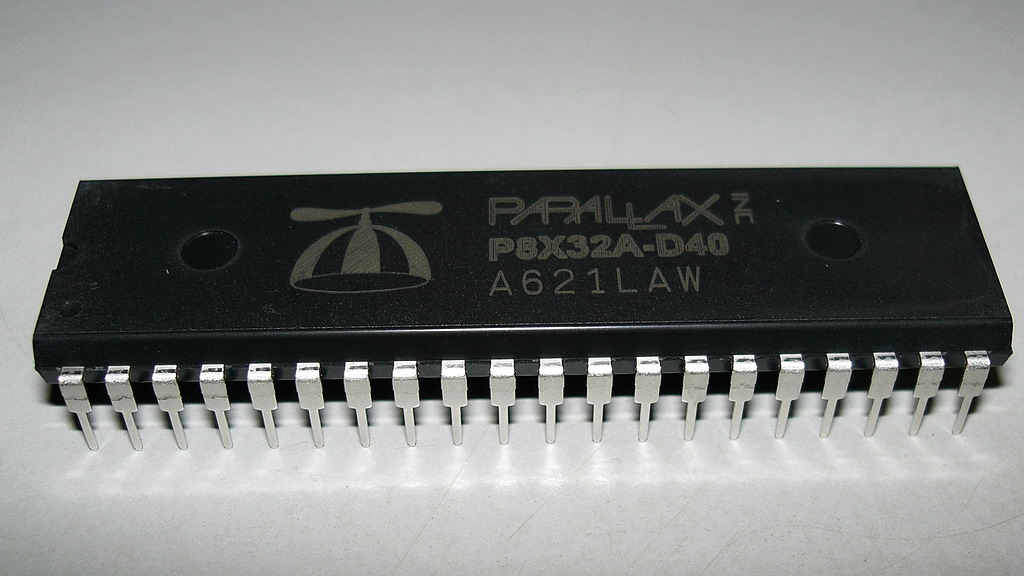 🇺🇸 United StatesParallax Propeller
Eight-core microcontroller with parallel processingMicrocontroller · RISC · 2006
 🇳🇴 NorwayAVR32
32-bit RISC microcontroller architecture by AtmelMicrocontroller · RISC · 2006
More from Freescale Semiconductor
All of them 🇺🇸 United StatesPowerPC e300
32-bit embedded microprocessor core by FreescaleCPU · Power · 2004
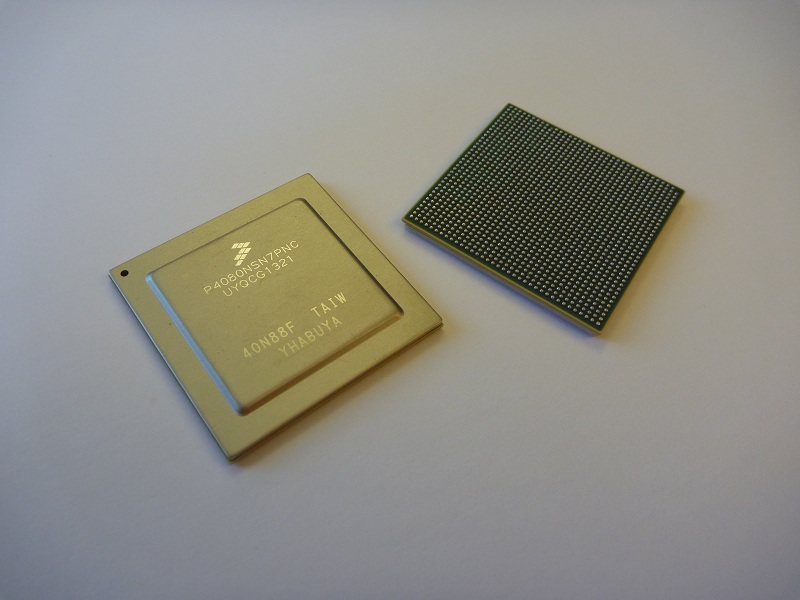 🇳🇱 NetherlandsQorIQ
NXP communications microprocessor brand for networking infrastructureCPU · Arm · 2008
WorldPowerPC e5500
64-bit embedded microprocessor core by FreescaleCPU · Power · 2010