
NEC V20
Pin-compatible 16-bit microprocessor with Intel 8088 compatibility
The NEC V20 is a 16-bit microprocessor launched in November 1982 by NEC. It offers pin and object-code compatibility with the Intel 8088 while adding new instructions and an 8080 emulation mode. Manufactured using 2-micron CMOS technology, it provided higher performance than its Intel counterpart at similar clock speeds.
- Contains 63,000 transistors, double the Intel 8088 count
- Pin and object-code compatible with Intel 8088
- Includes built-in Intel 8080 CPU emulation mode
- Won landmark copyright lawsuit against Intel in 1986
- Fabricated using 2-micron CMOS technology
What it is
The NEC V20 is a single-core microprocessor introduced in November 1982. Designed and produced by NEC, it serves as a direct replacement for the Intel 8088 in personal computers and embedded systems. The chip is pin compatible and object-code compatible with the 8088, meaning it fits into the same sockets and runs the same software. However, it includes an extended instruction set similar to the Intel 80188 and adds unique features like bit manipulation commands. This design allowed systems to gain performance improvements without changing their motherboard layout or software base.
How it came about
NEC developed the V20 to compete in the growing market for IBM PC compatibles. In 1982, Intel sued NEC over earlier processor designs, leading to an out-of-court settlement where NEC licensed Intel designs. A second lawsuit followed in late 1984, focusing on whether the V20 microcode infringed Intel patents. The court ruled in 1986 that microcode is protected by copyright but found that NEC had not copied Intel's code directly. The judge accepted NEC's cleanroom reverse engineering evidence, allowing the V20 to remain on the market. This legal victory established important precedents for semiconductor intellectual property.
Inside the chip
The V20 contains 63,000 transistors, more than double the count of the Intel 8088. It uses two internal 16-bit data buses, enabling concurrent data transfers that boost throughput. While the external data bus is 8 bits wide, multiplexed with the address bus, the internal architecture handles 16 bits. The chip supports a 20-bit address bus, allowing access to 1 MB of memory. A notable feature is the built-in Intel 8080 emulation mode, activated by specific instructions. This allows legacy 8080 software to run alongside native x86 code. The instruction set also includes operations for packed binary-coded decimal numbers and bit field manipulation.
How it was made
Manufactured using 2-micron CMOS technology, the V20 was initially available in speeds of 5, 8, and 10 MHz. The fabrication process was improved in 1990, resulting in the V20H and V20HL variants. These later versions offered better performance and lower power consumption, with speeds reaching up to 16 MHz. The V20HL models are fully static, meaning their clock can be stopped to save power. Besides NEC, other companies such as Sharp, Sony, and Zilog produced compatible versions under different part numbers, including the LH70108 and CXQ70108.
Where it went
The V20 was widely used in personal computers and industrial embedded systems during the 1980s. Its compatibility with the Intel 8088 made it a popular choice for manufacturers building IBM PC clones. The ability to emulate the Intel 8080 processor also made it useful for systems requiring support for older software libraries. Developers could mix 8080 and x86 code within the same application using special call instructions. The chip supported floating-point operations via the Intel 8087 coprocessor, although NEC’s own planned coprocessor was cancelled before production.
Versions and family
The V30, launched in September 1983, is a closely related variant with a 16-bit external data bus, making it compatible with the Intel 8086. Later iterations of the V20 included the V20H and V20HL, which featured refined manufacturing processes. The V20HL added static operation capabilities, allowing the clock to halt completely. The successor to the V20 line was the NEC V60, which moved to a more advanced 32-bit architecture. Other manufacturers produced second-source versions, ensuring supply chain stability for designers using the NEC design.


Questions people ask about NEC V20
Is the NEC V20 compatible with Intel 8088 software?
Yes, the V20 is both pin compatible and object-code compatible with the Intel 8088. This means it can replace the 8088 in existing hardware designs and run the same software without modification, while offering additional instructions and higher performance.
What makes the V20 faster than the Intel 8088?
The V20 has 63,000 transistors compared to the 8088's 29,000. It uses two internal 16-bit data buses for concurrent transfers and operates with a 50% clock duty cycle instead of 33%. These architectural improvements allow it to execute more instructions per clock cycle.
Can the V20 run old 8080 programs?
Yes, the V20 includes a hardware emulation mode for the Intel 8080 processor. By issuing a BRKEM instruction, the chip switches to emulate 8080 code, allowing legacy software to run. It can even mix 8080 and x86 code in the same program using specific call instructions.
Who manufactured the NEC V20 besides NEC?
Several other companies produced second-source versions of the V20. These include Sharp (as the LH70108), Sony (as the CXQ70108), and Zilog (as the Z70108). This multi-vendor availability helped ensure supply for computer manufacturers using the design.
Good reading and sources
The facts on this page come from the Wikipedia article "NEC V20", written by its contributors and used under the CC BY-SA 4.0 licence, and from its Wikidata record (CC0). EveryChip rewrote the text in its own words, with AI assistance, and compares every page with the article to make sure no passage is copied. It may be reused under the same CC BY-SA 4.0 licence with a link back.
It may contain mistakes, and figures change over time. Nothing here is investment or buying advice. If something is wrong, tell us. Last refreshed 2026-11-14.
Like NEC V20
All CPUs and microprocessors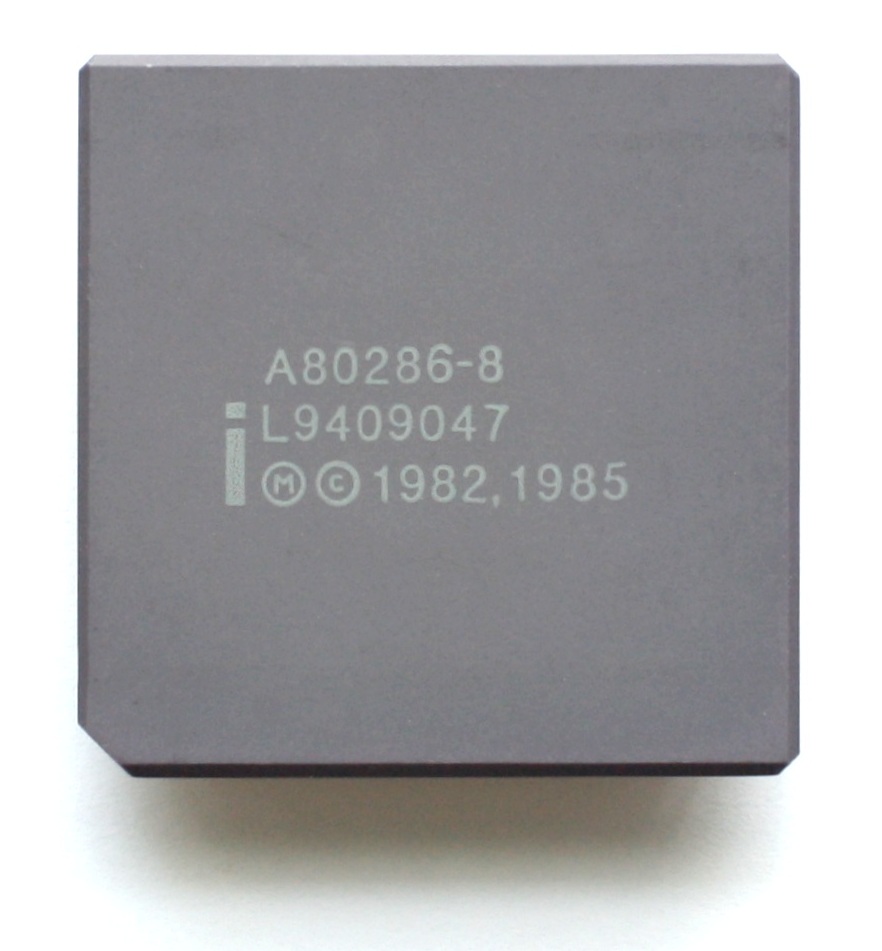 🇺🇸 United StatesIntel 80286
16-bit x86 CPU with protected mode and 24-bit addressing, launched in 1982CPU · x86 · 1982
 🇺🇸 United StatesIntel 80186
16-bit microprocessor with integrated peripherals for embedded systemsCPU · x86 · 1982
🇺🇸 United StatesIntel 80286
16-bit microprocessor with protected mode and 16 MB memory supportCPU · x86 · 1982
🇺🇸 United StatesIntel 80286
16-bit microprocessor with protected mode and 16 MB memory supportCPU · x86 · 1982
More from NEC
All of them 🇯🇵 JapanNEC μPD7720
Fixed-point digital signal processor from NECDSP · VLIW · 1981
 🇯🇵 JapanNEC μPD7220
Early single-chip graphics display controller for bit-mapped screensGPU · 1981
🇺🇸 United StatesHP Saturn
HP's 4-bit calculator microprocessor family, introduced in 1984CPU · Other · 1984
 🇯🇵 JapanNEC V20
Pin-compatible 16-bit microprocessor with Intel 8088 compatibilityCPU · x86 · 1984