
MOS Technology CIA
I/O controller chip for 6502-based home computers
The MOS Technology CIA is an integrated circuit that manages input and output for microprocessors. It features timers, serial ports and a real-time clock. This chip powered the Commodore 64 and Amiga systems.
- Includes a real-time clock driven by mains power frequency
- Features two programmable sixteen-bit interval timers
- Used in Commodore 64, 128 and Amiga computers
- Supports serial data rates up to 500 kbit/s
- Fixed shift register fault from the earlier 6522 VIA
What it is
The Complex Interface Adapter (CIA) is a support chip designed by MOS Technology. It acts as a bridge between the central processor and external devices. The chip handles parallel and serial data transfer, timing events and keeping track of the time of day. It was built to work with the 6502 family of microprocessors. Two of these chips were standard in the Commodore 64 computer. They managed tasks like reading the keyboard and controlling disk drives. The design improved upon the earlier 6522 Versatile Interface Adapter by fixing specific hardware faults.
How it came about
Engineers at MOS Technology developed the CIA to replace the 6522 VIA. The older chip had a flaw in its shift register that slowed down data transfers on the VIC-20. The new design corrected this issue. Although the fix was present, the Commodore 64 did not use the fast serial feature to stay compatible with existing disk drives. The chip became a core component of Commodore’s eight-bit and sixteen-bit home computers. Later revisions adapted the timekeeping logic for different power standards and system architectures.
Inside the chip
The chip provides two eight-bit ports for parallel data. Each line can be set to send or receive signals independently. A built-in shift register handles serial communication, supporting speeds up to 500 kilobits per second on faster models. Two programmable timers offer precise control, counting down from sixteen-bit values. These can trigger interrupts or gate signals to other ports. A dedicated real-time clock tracks hours, minutes and seconds in binary-coded decimal format. It can also function as an alarm clock. The clock runs off the mains power frequency, either fifty or sixty hertz, to maintain accuracy without drift.
How it was made
MOS Technology produced the CIA in several speed grades. The standard 6526 ran at one megahertz. Faster versions, the 6526A and 6526B, operated at two and three megahertz respectively. The components came in forty-pin dual inline packages, made from ceramic or plastic. The later 8520 model changed the internal clock structure. Instead of decimal registers, it used a twenty-four-bit binary counter. This version appeared in the Amiga computer and the Commodore 1581 disk drive. Some cost-reduced systems integrated a simplified version of the logic into custom gate arrays.
Where it went
This interface adapter was essential for the Commodore 64 and Commodore 128. Each machine contained two units to handle various input and output tasks. They controlled the floppy disk interfaces in the 1570 and 1571 drives. The Amiga home computer relied on the 8520 variant for similar duties. The chip managed serial communications, allowing simple networks to be formed by linking multiple machines. It also provided the system clock for time-sensitive operations. Developers used the interval timers for generating precise delays and measuring short durations in software.
Versions and family
The primary models were the 6526, 6526A and 6526B, differing mainly in their maximum clock speeds. The 8520 was a significant revision with a binary time-of-day counter. A reduced-functionality version existed within the 5710 gate array found in later Commodore 128 models. This embedded logic lacked timer registers but kept the serial and port functions. The 5710 hardwired certain timing values, changing how serial bits were transmitted compared to the standalone chips. These variations allowed the same basic architecture to serve different performance and cost requirements across the product line.
Why it matters
The CIA defined how Commodore computers interacted with the outside world. Its inclusion of a hardware real-time clock was unusual for home micros of that era. By deriving time from the power line frequency, it offered stable long-term accuracy. The chip’s flexibility allowed it to support both serial networks and precise event timing. It remained in production for many years, serving as a reliable I/O solution. The design influenced how peripheral controllers were integrated into subsequent system-on-chip architectures.
Problems and reception
Several hardware bugs affected early units. An alarm interrupt might fail if the seconds value was exactly zero. A workaround involved setting the tenths digit to a non-zero value. Another defect caused missed timer interrupts if the control register was read at a critical moment. This issue, combined with operating system quirks, led to communication errors at high baud rates. Despite these flaws, the chip was widely adopted and remained a standard part of the Commodore ecosystem.


Questions people ask about MOS Technology CIA
What does the CIA chip do in a Commodore 64?
It manages input and output tasks. This includes reading the keyboard, handling serial data, running timers and keeping track of the time of day. The computer uses two of these chips to coordinate these functions.
How accurate is the real-time clock on the CIA?
It is quite stable because it uses the fifty or sixty hertz signal from the mains power supply. This prevents long-term drift. However, software must correctly identify the local power frequency to ensure the time is kept accurately.
What is the difference between the 6526 and the 8520?
The 8520 is a later version used in the Amiga. It changes the time-of-day clock from a binary-coded decimal format to a twenty-four-bit binary counter. Other functions like the timers and I/O ports remain largely similar.
Good reading and sources
- MOS Technology CIA on WikipediaEncyclopedia
- More photos on Wikimedia CommonsPhotos
- Wikidata recordOpen data
The facts on this page come from the Wikipedia article "MOS Technology CIA", written by its contributors and used under the CC BY-SA 4.0 licence, and from its Wikidata record (CC0). EveryChip rewrote the text in its own words, with AI assistance, and compares every page with the article to make sure no passage is copied. It may be reused under the same CC BY-SA 4.0 licence with a link back.
It may contain mistakes, and figures change over time. Nothing here is investment or buying advice. If something is wrong, tell us. Last refreshed 2026-11-14.
Like MOS Technology CIA
All analog, power and mixed-signal 🇯🇵 JapanYamaha YMF7xx
Yamaha family of ISA and PCI sound controller chipsAnalog
 🇺🇸 United States7400 series
Standardised transistor-transistor logic integrated circuits for digital electronics.Analog · 1964
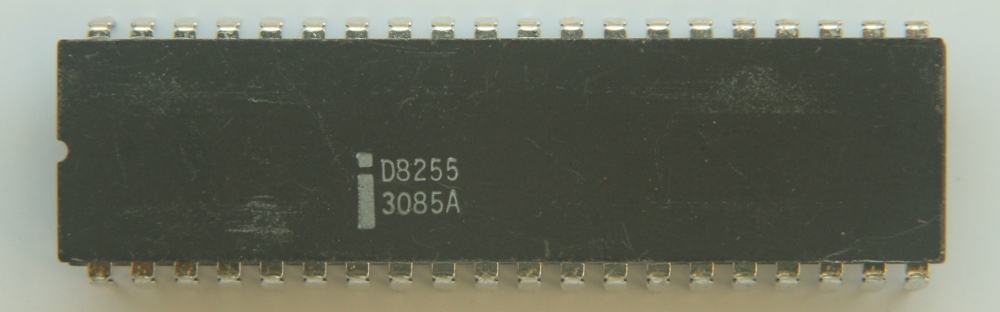 🇺🇸 United StatesIntel 8255
Programmable parallel input/output interface chip for early microprocessorsAnalog · 1970
More from MOS Technology
All of them 🇺🇸 United StatesMOS Technology 6522
I/O controller chip for 6502 microprocessorsMicrocontroller · Other
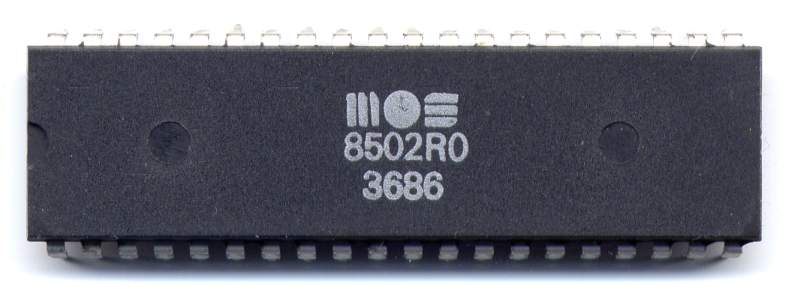 WorldMOS Technology 8502
An 8-bit CPU from MOS Technology that powered the Commodore 128CPU · 8-bit
🇺🇸 United StatesMOS Technology 6551
UART companion chip for the 6502 microprocessorAnalog