MCDRAM
High-bandwidth 3D-stacked memory for Intel Xeon Phi processors
MCDRAM is a 3D-stacked dynamic random-access memory developed by Intel and Micron Technology. It serves the Intel Xeon Phi Knights Landing processor, offering high bandwidth to support its many cores and vector units.
- Developed by Intel and Micron Technology
- Provides bandwidth over 400 GB/s
- Used in Intel Xeon Phi Knights Landing
- Capacity up to 16 GB at launch
- Based on Hybrid Memory Cube standard
What it is
MCDRAM stands for Multi-Channel DRAM. It is a type of three-dimensional stacked dynamic random-access memory. Intel developed it in partnership with Micron Technology. This memory technology supports the Intel Xeon Phi processor, specifically the version codenamed Knights Landing. It functions as a variant of the Hybrid Memory Cube standard. Its primary role is to provide sufficient data throughput for processors with many cores and vector processing units. Traditional memory modules often cannot supply data fast enough for such hardware. MCDRAM addresses this bottleneck by offering significantly higher bandwidth through multiple access channels.
How it came about
Intel created MCDRAM to work alongside the Xeon Phi Knights Landing processor. The design emerged from a collaboration with Micron Technology. It was built as a version of the Hybrid Memory Cube architecture. This development positioned it as a competitor to High Bandwidth Memory standards. The goal was to solve the data supply issue for highly parallel processors. By increasing the number of channels available to the cores, the system could handle greater data demands. This approach allowed the many cores in the Xeon Phi to operate more efficiently without waiting for data from slower traditional memory sources.
Inside the chip
The architecture uses a 3D-stacked design to save space and improve speed. It connects to the processor via many more channels than standard DIMMs use. This multi-channel approach enables bandwidth speeds exceeding 400 GB per second. Latency remains similar to standard DIMM access times. The physical placement on the processor limits its capacity to 16 GB at launch. Software can partition this memory at boot time. Some parts act as a cache for distant DDR memory. Other parts map directly into the physical address space. Applications can request specific memory pages using tools like the memkind API. Using it as a cache may increase latency on misses, requiring application tuning.
How it was made
Intel and Micron Technology jointly developed this memory technology. It is based on the Hybrid Memory Cube specification. The manufacturing involves 3D stacking techniques for the DRAM cells. This method allows for a compact form factor directly on or near the processor package. The production supports capacities up to 16 GB for the initial release. The design prioritizes high channel counts to maximize data transfer rates. This construction differs from traditional flat memory modules. It integrates closely with the Xeon Phi processor to ensure efficient data flow between the cores and the storage elements.
Where it went
This memory serves the Intel Xeon Phi Knights Landing processor. These processors are typically found in high-performance computing environments. The high bandwidth supports applications that require rapid data access. Scientific simulations and data analytics benefit from the increased throughput. The memory helps manage the heavy load generated by many cores and vector units. It is suitable for systems where traditional DIMMs create a bottleneck. Developers use APIs to optimize how applications utilize the memory. It can function as a fast cache or as direct addressable storage. This flexibility allows it to support various computational workloads in data centres.
Versions and family
MCDRAM is specifically tied to the Knights Landing generation of Xeon Phi. It is a version of the Hybrid Memory Cube. No other variants or successors are detailed in the provided information. The capacity was limited to 16 GB at launch. There were speculations about higher capacities in future iterations, but these are not confirmed facts. It competes with High Bandwidth Memory technologies. The design is unique to its partnership with Micron and its integration with Intel's many-core processors. It does not appear in other processor families outside the Xeon Phi line described here.
Why it matters
MCDRAM addressed the bandwidth limitations of traditional memory for many-core processors. It enabled the Xeon Phi Knights Landing to achieve higher performance levels. By providing over 400 GB/s of bandwidth, it reduced data starvation for cores. This technology highlighted the importance of memory architecture in high-performance computing. It offered an alternative to High Bandwidth Memory standards. The integration of 3D-stacked DRAM demonstrated a path for increasing memory speed without expanding physical footprint. Its programmable nature allowed developers to optimize usage for specific tasks, influencing how software interacts with hardware memory hierarchies.
Questions people ask about MCDRAM
What is MCDRAM?
MCDRAM is a 3D-stacked DRAM developed by Intel and Micron. It provides high bandwidth for the Intel Xeon Phi Knights Landing processor, helping many cores access data quickly.
How fast is MCDRAM?
It offers bandwidth speeds of over 400 GB per second. This high speed comes from having many more channels to access the memory compared to traditional DIMMs.
How much memory does it have?
At launch, the capacity was up to 16 GB. Physical placement on the processor limits the size, though there were speculations about higher capacities in the future.
Can programmers control how MCDRAM is used?
Yes. Memory can be partitioned at boot time. Applications can use APIs like memkind to assign pages to cache, direct DDR, or uncached MCDRAM regions.
Good reading and sources
The facts on this page come from the Wikipedia article "MCDRAM", written by its contributors and used under the CC BY-SA 4.0 licence, and from its Wikidata record (CC0). EveryChip rewrote the text in its own words, with AI assistance, and compares every page with the article to make sure no passage is copied. It may be reused under the same CC BY-SA 4.0 licence with a link back.
It may contain mistakes, and figures change over time. Nothing here is investment or buying advice. If something is wrong, tell us. Last refreshed 2026-11-14.
Like MCDRAM
All memory chips WorldDRAM
Volatile semiconductor memory using capacitors and transistors for high-density storage.Memory
 🇺🇸 United StatesIntel 1103
First commercially available DRAM integrated circuitMemory · 1970
🇺🇸 United StatesHyperCloud Memory
High-density DDR3 server memory module by NetlistMemory · 2009
WorldHybrid Memory Cube
Stacked DRAM with a serial link interface, built by Samsung and MicronMemory · Other · 2011
More from Intel
All of them WorldIntel 8279
Programmable keyboard and display controller for Intel microprocessorsAnalog
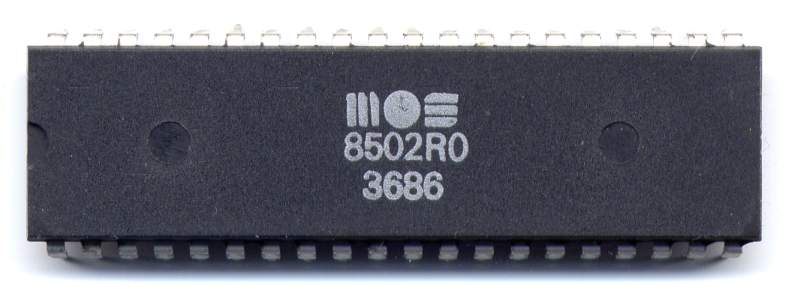 WorldMOS Technology 8502
An 8-bit CPU from MOS Technology that powered the Commodore 128CPU · 8-bit
 🇺🇸 United StatesRapidCAD
A 486DX in a 386 socket, with a dummy FPU chip to match.CPU · x86
🇺🇸 United StatesTolapai
Intel embedded SoC with Pentium M core and security accelerationSoC · x86