Intel MCS-296
High-performance microcontroller for embedded DSP and control
The Intel MCS-296 is a family of microcontrollers designed for embedded digital signal processing and feedback control. It improves on the MCS-96 with faster math capabilities while maintaining compatibility.
- Operates at speeds up to 50 MHz
- Delivers 12.5 DSP MIPS performance
- Features a 40-bit accumulator and fast multiplier
- Maintains compatibility with the MCS-96 family
- Supports up to 6 MB of addressable memory
What it is
The Intel MCS-296 is a family of microcontrollers developed by Intel. It serves as an enhanced version of the earlier MCS-96 series, retaining full compatibility while boosting mathematical performance. This improvement makes the chip suitable for embedded digital signal processing tasks and complex feedback control systems. The device operates at speeds up to 50 MHz and uses a pipeline architecture to handle instructions efficiently. It offers a large addressable memory space and dedicated hardware for rapid calculations.
How it came about
This microcontroller family was created as an evolution of the Intel MCS-96 line. The design team focused on improving mathematical throughput without breaking existing software compatibility. By keeping the instruction set aligned with its predecessor, Intel allowed users to upgrade their systems with minimal re-engineering. The result was a chip that could handle more demanding real-time control applications while fitting into established development workflows.
Inside the chip
The MCS-296 uses a pipeline architecture to increase instruction throughput. It features a 40-bit accumulator and a fast hardware multiplier, which accelerate mathematical operations significantly. These components allow the chip to achieve 12.5 DSP MIPS (million instructions per second). Memory resources include 2 KB of combined code and data RAM, along with 512 bytes of register RAM. The system can address up to 6 MB of external memory, providing flexibility for larger applications.
How it was made
Intel manufactured the MCS-296 family. Specific details regarding the semiconductor process node, transistor count, or physical packaging are not provided in the available records. The focus of the technical documentation remains on the logical architecture and performance metrics rather than the physical fabrication details.
Where it went
These microcontrollers are primarily used in embedded systems that require real-time signal processing. Common applications include feedback control loops where rapid mathematical computation is critical. The improved math performance makes it practical for industrial control, motor drives, and other devices where precise timing and calculation speed are necessary. It serves as a bridge between general-purpose control and specialized digital signal processing.
Versions and family
The MCS-296 is often referred to by the model number 80296. It belongs to the broader MCS-96 family lineage. While it introduces significant performance enhancements, it maintains compatibility with the original MCS-96 architecture. No specific successors or later variants are detailed in the provided information.
Why it matters
The MCS-296 extended the utility of the MCS-96 architecture into more demanding embedded applications. By offering higher DSP performance within a compatible framework, it allowed engineers to tackle more complex control problems without adopting entirely new development tools. This approach helped sustain the relevance of the MCS-96 ecosystem in industrial and embedded markets.
Questions people ask about Intel MCS-296
What is the Intel MCS-296?
It is a family of microcontrollers from Intel that improves upon the MCS-96 series. It offers better math performance for embedded digital signal processing and control systems.
Is the MCS-296 compatible with older chips?
Yes, it remains compatible with the Intel MCS-96 family. This allows developers to upgrade performance while using existing code and tools designed for the earlier generation.
What are the key memory specifications?
The chip includes 2 KB of code and data RAM, 512 bytes of register RAM, and can address up to 6 MB of external memory space for larger applications.
Good reading and sources
The facts on this page come from the Wikipedia article "Intel MCS-296", written by its contributors and used under the CC BY-SA 4.0 licence, and from its Wikidata record (CC0). EveryChip rewrote the text in its own words, with AI assistance, and compares every page with the article to make sure no passage is copied. It may be reused under the same CC BY-SA 4.0 licence with a link back.
It may contain mistakes, and figures change over time. Nothing here is investment or buying advice. If something is wrong, tell us. Last refreshed 2026-11-14.
Like Intel MCS-296
All microcontrollers 🇺🇸 United States and 1 moreMCS-96
A 16-bit microcontroller family for embedded control systems.Microcontroller · Other
 🇺🇸 United StatesMCS-48
Intel's first microcontroller series from 1976Microcontroller · Other · 1976
 🇺🇸 United StatesIntel MCS-51
An 8-bit microcontroller series for embedded systems.Microcontroller · Other · 1980
🇺🇸 United StatesMOS Technology 6532
Integrated circuit combining RAM, I/O ports and a timer for 1970s systems.Microcontroller · Other
More from Intel
All of them WorldIntel 8279
Programmable keyboard and display controller for Intel microprocessorsAnalog
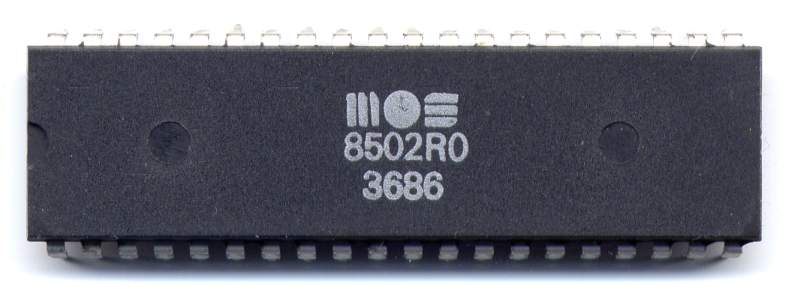 WorldMOS Technology 8502
An 8-bit CPU from MOS Technology that powered the Commodore 128CPU · 8-bit
 🇺🇸 United StatesRapidCAD
A 486DX in a 386 socket, with a dummy FPU chip to match.CPU · x86
🇺🇸 United StatesTolapai
Intel embedded SoC with Pentium M core and security accelerationSoC · x86