Modems and radio
Baseband and RF chips for 2G to 5G, Wi-Fi and Bluetooth. 6 chips on EveryChip so far.
A modem chip turns digital data into radio waves and back. In a phone the baseband processor handles the mobile network's rules, from 2G to 5G, while separate radio-frequency (RF) chips amplify and filter the signal near the antenna. Wi-Fi and Bluetooth chips do the same for short distances. Qualcomm, MediaTek, Samsung, Huawei's HiSilicon and, since 2025, Apple design phone modems.
Inside a modem
A baseband chip runs signal processing to code and decode data, correct errors and share the radio channel with other users, plus software that follows the network's protocols. The RF front end has power amplifiers, low-noise amplifiers, filters and switches, often made from materials such as gallium arsenide. A 5G phone must support dozens of frequency bands, which makes the front end crowded.
Who makes them
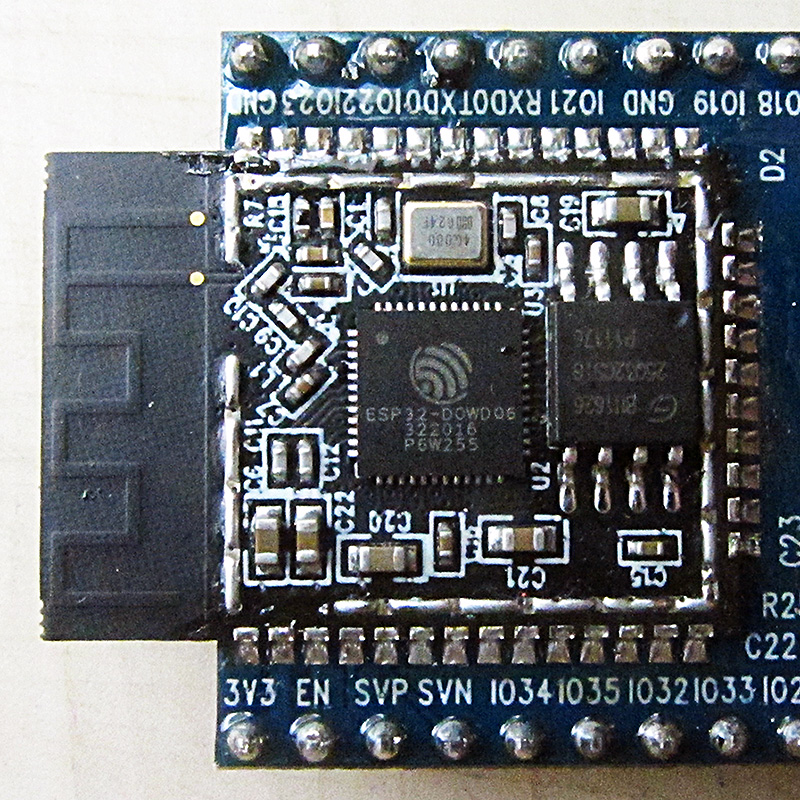
Qualcomm has long been the largest supplier of phone modems. Intel's XMM modems went into some iPhones from 2016 to 2019; Apple bought most of Intel's modem business in 2019 and launched its own C1 modem in 2025. Espressif's ESP8266 and ESP32 brought cheap Wi-Fi to hobby and industrial devices. Modem patents and licensing have been the subject of long legal disputes.
Famous modem chips

Further reading
 🇰🇷 South KoreaExynos
Samsung's Arm-based system-on-chip series for phones, wearables, cars and IoTSoC · Arm · 2009
 🇺🇸 United StatesQualcomm Snapdragon
Qualcomm's brand of ARM-based systems on chip, modems and wireless controllersSoC · Arm · 2007
 🇸🇪 SwedenNovaThor
Smartphone system on chip and modem platform by ST-EricssonSoC · Arm · 2009
🇰🇷 South KoreaExynos 2500
3nm mobile system on a chip with satellite connectivitySoC · Arm
Photo credits on this page
The small pictures above come from Wikimedia Commons under free licences. Some are cropped to fit.
- ESP32: Brian Krent, CC BY-SA 4.0, source
- Exynos: Köf3, CC BY-SA 3.0, source
- Qualcomm Snapdragon: Raimond Spekking, CC BY-SA 4.0, source
- NovaThor: Nixdorf, CC BY-SA 3.0, source
- ESP8266: Laserlicht, CC BY-SA 4.0, source