XAP processor
Low-power RISC core for wireless and sensor chips
Cambridge Consultants developed the XAP series of 16-bit and 32-bit RISC processor cores. Designed for low-energy mixed-signal chips, these cores power billions of devices in Bluetooth, Zigbee and medical applications.
- Over one billion XAP processors are in use worldwide
- XAP1 used only 3,000 gates in its initial design
- XAP5 can address up to 16 MB of program memory
- Optimized for GNU GCC to achieve high code density
- Supports Bluetooth, Zigbee, GPS and RFID applications
What it is
The XAP processor is a family of reduced instruction set computing (RISC) cores created by Cambridge Consultants. These designs target mixed-signal integrated circuits where power efficiency and small size are critical. The architecture supports both 16-bit and 32-bit operations, making it suitable for battery-powered devices. Engineers use these cores in chips for wireless communication standards like Bluetooth and Zigbee, as well as in global positioning systems and radio frequency identification tags. The design allows for implementation in various circuit styles, including synchronous and asynchronous logic.
How it came about
Development began in 1994 with the XAP1, a compact 16-bit Harvard architecture core intended for on-chip read-only memory. In 1999, the XAP2 launched with improved compatibility for Flash memory and off-chip storage, reaching twelve thousand gates. An experimental 32-bit version, XAP3, appeared in 2003 using a Von Neumann architecture to simplify memory management. The XAP4 followed in 2005 to replace the XAP2, offering better performance for analog data processing. The XAP5 arrived in 2008 with extended addressing capabilities, and the 32-bit XAP6 launched in 2013.
Inside the chip
Early models used a Harvard architecture with separate buses for instructions and data. Later versions shifted to a Von Neumann design, sharing a single address space to reduce complexity and cost. The cores feature load-store architectures with general purpose registers and specific pointers for program vectors. Instruction pipelines range from two stages in the 16-bit models to three stages in the XAP6. The instruction sets support high code density when compiled with GNU GCC, which helps minimize memory usage. This efficiency lowers energy consumption and allows direct execution from slow Flash memory.
How it was made
Cambridge Consultants licenses the XAP technology as intellectual property rather than manufacturing physical chips themselves. Semiconductor companies integrate these soft cores into their own application-specific integrated circuits. The designs are optimized for modern CMOS processes, with the XAP5 targeting a 0.13 micron node. Gate counts remain low, starting at three thousand for the original XAP1 and rising to thirty thousand for the XAP6. This small footprint enables high-volume production of low-cost devices. The cores support various implementation styles, including field-programmable gate arrays and fully synchronous circuits.
Where it went
These processors are found in over one billion devices worldwide. Major applications include Bluetooth chips for mobile phones and headsets, primarily through CSR plc. Ember Corporation utilized the core for Zigbee networking products, while Cyan Technology embedded it in microcontrollers. The low power profile makes it ideal for wireless sensor networks and portable medical devices. It serves as a migration path for systems upgrading from older eight-bit processors like the 8051, offering more performance without the overhead of full thirty-two bit systems.
Versions and family
The family includes six main iterations. XAP1 was a minimal 16-bit design. XAP2 added interrupt support and a C compiler toolchain. XAP3 introduced thirty-two bit capabilities and shared memory. XAP4 refined the 16-bit approach for analog-to-digital conversion tasks. XAP5 expanded addressable memory to sixteen megabytes and added features for Flash execution. XAP6 returned to a thirty-two bit register set with a three-stage pipeline. Each variant adjusted the balance between gate count, speed and memory addressing to suit evolving market needs.
Why it matters
The XAP architecture has achieved significant commercial reach through its licensing model. By enabling fabless semiconductor companies to build efficient wireless chips, it helped standardize low-energy connectivity in consumer electronics. The focus on code density and low gate count allowed manufacturers to produce very cheap system-on-chip solutions. Its presence in billions of units demonstrates its role in the widespread adoption of short-range wireless technologies. The design philosophy influenced how embedded cores are optimized for specific process nodes and memory types.
Questions people ask about XAP processor
Who designed the XAP processor?
Cambridge Consultants designed the XAP processor family. They developed the architecture and license it to other semiconductor companies for use in their own chip designs.
What is the primary use of XAP cores?
XAP cores are primarily used in low-power, battery-operated devices. Common applications include Bluetooth and Zigbee chips, GPS receivers, and medical sensors where energy efficiency is critical.
How many XAP chips have been produced?
There are over one billion XAP processors in use worldwide. This large volume results from licensing the core to major suppliers of wireless connectivity chips.
What is the difference between XAP1 and XAP2?
XAP1 was a simple 16-bit Harvard architecture core for on-chip ROM. XAP2 added support for Flash memory, interrupts, and a wider address bus, making it more versatile for complex programs.
Good reading and sources
The facts on this page come from the Wikipedia article "XAP processor", written by its contributors and used under the CC BY-SA 4.0 licence, and from its Wikidata record (CC0). EveryChip rewrote the text in its own words, with AI assistance, and compares every page with the article to make sure no passage is copied. It may be reused under the same CC BY-SA 4.0 licence with a link back.
It may contain mistakes, and figures change over time. Nothing here is investment or buying advice. If something is wrong, tell us. Last refreshed 2026-11-14.
Like XAP processor
All microcontrollers 🇯🇵 JapanV850
32-bit RISC microcontroller architecture for embedded systemsMicrocontroller · RISC · 1994
 🇺🇸 United StatesPIC16x84
8-bit microcontroller family with EEPROM and Flash memoryMicrocontroller · RISC · 1993
 🇳🇴 NorwayAVR
8-bit RISC microcontroller family with on-chip flash memoryMicrocontroller · RISC · 1997
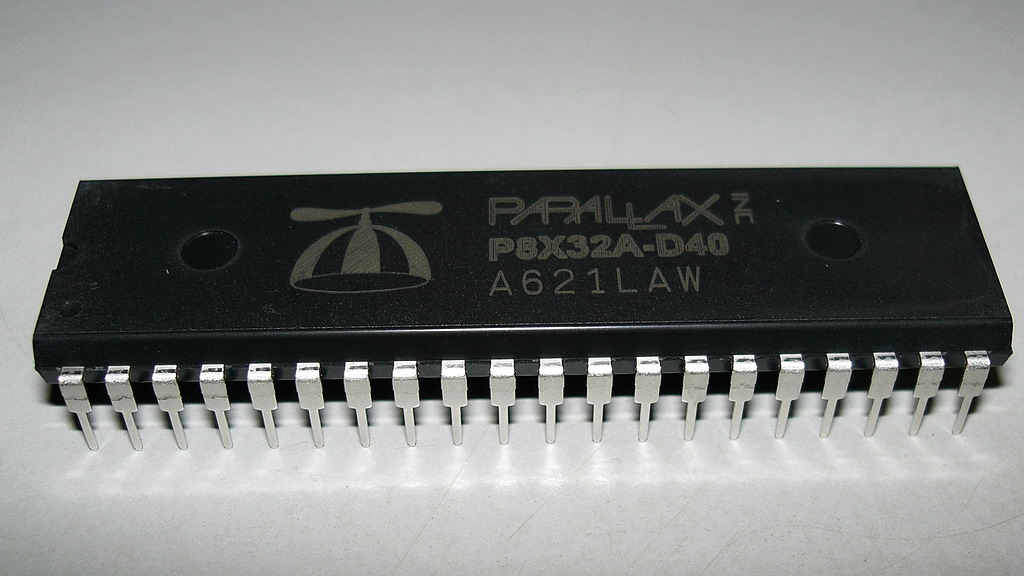 🇺🇸 United StatesParallax Propeller
Eight-core microcontroller with parallel processingMicrocontroller · RISC · 2006