Communications Processor Module
Offloads input/output tasks in Motorola and Freescale microprocessors.
The Communications Processor Module is a dedicated component within Motorola and Freescale microprocessors. It handles data transmission and imaging tasks, allowing the main processor to focus on other computations. First seen in the 68360 QUICC, it uses a separate RISC core to manage serial interfaces and timing.
- Offloads input/output tasks from the main CPU.
- Uses a separate RISC microcontroller for communication.
- First appeared in the Motorola 68360 QUICC chip.
- Supports serial, USB, and I2C interfaces.
What it is
The Communications Processor Module, often called CPM, is a specialised hardware block found inside certain Motorola and Freescale microprocessors. Its primary role is to manage input and output operations, such as sending and receiving data through serial ports. By taking over these communication tasks, the CPM frees the main central processing unit to handle other computational work. This design is particularly useful for applications that require precise timing during data transfer, ensuring the main processor does not get bogged down by routine data handling duties.
How it came about
Motorola introduced the concept with the 68302 Integrated Multiprotocol Processor, which used a RISC processor controlled by microcode or firmware. The first chip to feature the specific Communications Processor Module was the Motorola 68360 QUICC. This device offered microcode support for Signaling System 7 and ISDN applications. Later, the technology moved into the PowerQUICC series, based on PowerPC and Power ISA architectures. Early models in this new series, such as the MPC860, retained a CPM design very similar to the original 68360 implementation.
Inside the chip
The CPM operates using its own small RISC microcontroller, known as the Communication Processor. This unit is distinct from the main CPU core of the chip. They communicate via dual-ported RAM, along with special registers for commands, configuration, and events. Interrupts are also used for interaction. The module includes direct memory access circuitry, an interrupt controller, and baud rate generators. It supports various interfaces, including serial communication controllers, Universal Serial Bus, I squared C, and Serial Peripheral Interface Bus attachments.
How it was made
Specific manufacturing details such as the process node or transistor count are not provided in the available records. The module was produced as part of larger microprocessor units by Motorola and later Freescale Semiconductor. The design relied on embedded microcode stored in read-only memory or downloadable firmware to define its behaviour for different communication protocols. This approach allowed the same hardware to support varied applications without changing the physical silicon layout.
Where it went
Engineers used the CPM in systems requiring robust communication capabilities. It handled medium access control and managed serial interfaces for data transmission. A notable usage pattern involved running the host chip in slave mode. For instance, on the M68360QUADS-040 board, the main CPU of the 68360 was disabled. Instead, an external 68040 CPU acted as the master, while the 68360 served purely as a communications co-processor. This flexibility allowed designers to pair powerful general-purpose processors with dedicated communication hardware.
Versions and family
The Motorola 68360 QUICC was the inaugural design to include the CPM. Subsequent iterations appeared in the PowerQUICC line, which shifted to PowerPC and Power ISA instruction sets. The MPC860 is an example of an early PowerQUICC chip that kept the CPM architecture largely unchanged from its 68360 predecessor. Different microcode versions were shipped to support specific needs, such as Centronics parallel interface or telephony signalling standards, though the programming interface specifications were typically kept internal.
Why it matters
The CPM established a method for offloading input/output processing from the main processor. This separation improved system efficiency by ensuring that time-critical data transmission tasks did not interfere with general computation. It allowed microprocessors to maintain high performance in networking and imaging applications where quick response times are essential. The architecture influenced later designs in the PowerQUICC family, demonstrating the value of dedicated hardware for communication protocols in embedded systems.
Questions people ask about Communications Processor Module
What is the main purpose of the Communications Processor Module?
The CPM handles input and output processing, such as data transmission via serial interfaces. This allows the main microprocessor to focus on other tasks instead of managing communication timing and data flow.
How does the CPM interact with the main processor?
It uses a separate RISC microcontroller that communicates with the main CPU core through dual-ported RAM. They also exchange information via special command registers, configuration settings, and interrupts.
Can the CPM operate independently of its host CPU?
Yes. The host chip can run in slave mode where its own CPU is disabled. In this setup, an external processor acts as the master, using the CPM solely for its communication and input/output capabilities.
Good reading and sources
The facts on this page come from the Wikipedia article "Communications Processor Module", written by its contributors and used under the CC BY-SA 4.0 licence, and from its Wikidata record (CC0). EveryChip rewrote the text in its own words, with AI assistance, and compares every page with the article to make sure no passage is copied. It may be reused under the same CC BY-SA 4.0 licence with a link back.
It may contain mistakes, and figures change over time. Nothing here is investment or buying advice. If something is wrong, tell us. Last refreshed 2026-11-14.
Like Communications Processor Module
All systems on a chip 🇸🇪 SwedenETRAX CRIS
Embedded RISC processors by Axis CommunicationsSoC · RISC · 1993
🇺🇸 United StatesTolapai
Intel embedded SoC with Pentium M core and security accelerationSoC · x86
🇮🇳 India and 1 moreVEGA Microprocessors
RISC-V microprocessor family from India for IoT and edge computingCPU · RISC-V
WorldMDSP
Multiprocessor digital signal processor family for video tasksDSP · RISC
More from Motorola
All of them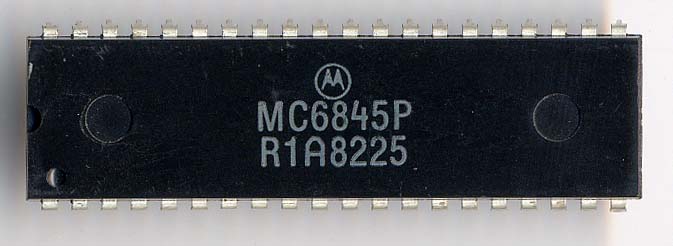 🇺🇸 United StatesMotorola 6845
Display controller for 1980s home computers and early PC graphics cardsGPU
🇺🇸 United StatesRAD5500
Radiation-hardened PowerPC processor for space systemsCPU · Power
 WorldMotorola 68851
External memory management unit for Motorola 68020 processorsAnalog · 68k
 🇺🇸 United StatesI.MX
ARM-based system-on-chip family for multimedia and embedded systems by NXP Semiconductors.SoC · Arm