
Apple S8
System in a package chip for Apple Watch devices released in 2022.
The Apple S8 is a system in a package designed by Apple Inc. It debuted in September 2022 as part of the Apple Watch Series 8 and Ultra lines. This chip follows the Apple S7 and continues the company's custom silicon strategy for wearables.
- Released in September 2022 for Apple Watch Series 8 and Ultra.
- Designed by Apple Inc. as part of the Apple Silicon family.
- Follows the Apple S7 processor in the product lineage.
- Uses a system in a package configuration.
- Based on the ARM architecture.
What it is
The Apple S8 functions as a system in a package within the Apple Silicon family. Designed by Apple Inc., this integrated circuit targets wearable technology rather than computers or phones. It serves as the central processing unit for specific smartwatch models. The device represents a continuation of Apple's move toward proprietary hardware for its mobile accessories. By consolidating components into a single package, it supports the compact form factor required for wrist-worn devices. This chip enables the computational capabilities found in modern fitness and communication trackers.
How it came about
Apple introduced the S8 chip in September 2022. It arrived alongside the launch of the Apple Watch Series 8 and the Apple Watch Ultra. The processor succeeds the Apple S7, marking an incremental step in the wearable silicon lineage. While the broader Apple Silicon transition focused on Macs and iPads, the S-series remained dedicated to the watch ecosystem. This release ensured that newer watch models could handle increased sensor data and connectivity demands without expanding their physical size significantly.
Inside the chip
As a system in a package, the S8 integrates multiple electronic functions into one unit. It utilizes the ARM architecture, which is standard for energy-efficient mobile processors. The design prioritizes power management and thermal efficiency suitable for a small enclosure. Specific internal microarchitecture details are not provided in the available records. However, the progression from the S7 suggests improvements in processing speed or feature support. The integration allows the watch to manage sensors, wireless connections, and user interface tasks simultaneously.
How it was made
Apple typically outsources production to contract foundries such as TSMC or Samsung, but the specific factory for the S8 is not listed. The chip is classified as a system in a package, meaning memory and other components are stacked or placed closely together. Without explicit data on the fabrication technique, the exact physical scale remains unknown.
Where it went
The primary application for the Apple S8 is within the Apple Watch Series 8. It also powers the Apple Watch Ultra model. These devices rely on the chip for timekeeping, health monitoring, and communication features. The processor handles the operating system and runs applications installed on the watch. Its use case is strictly limited to wearable computing, distinguishing it from the A-series chips used in iPhones or M-series chips in Macs.
Versions and family
The Apple S8 directly follows the Apple S7 in the product timeline. No successor chip is listed in the provided sources. The chip appears in two distinct watch models: the standard Series 8 and the rugged Ultra variant. Differences in performance between these models are not detailed. The S8 represents a specific generation in the continuous evolution of Apple's wearable silicon, bridging the gap between earlier S-series designs and future iterations.
Why it matters
The S8 maintains Apple's strategy of vertical integration in the wearable market. By using custom silicon, Apple controls both hardware and software optimization for the watch platform. This approach ensures consistent performance across different watch models. The chip supports the growing demand for health tracking and independent connectivity in smartwatches. Its release reinforces the Apple Watch line as a mature product category with dedicated engineering resources.
Problems and reception
The chip was launched as part of a standard annual product cycle. No negative reception or technical issues are recorded in the provided text. The focus remains on its role as a functional component within the new watch lineup.


Questions people ask about Apple S8
What devices use the Apple S8 chip?
The Apple S8 is used in the Apple Watch Series 8 and the Apple Watch Ultra. It serves as the main processor for these wearable devices, handling all computational tasks.
Who designed the Apple S8?
Apple Inc. designed the Apple S8. It is part of the company's custom Apple Silicon lineup, which includes chips for iPhones, iPads, Macs, and watches.
Is the Apple S8 a successor to the Apple S7?
Yes, the Apple S8 follows the Apple S7. It was released in September 2022, continuing the evolution of Apple's wearable processor technology.
Good reading and sources
- Checking your browserAnandTech, Article
- For Chip Makers, the Next Battle Is in Smartphones (Published 2010)The New York Times, Article
- iPhone 6 and iPhone 6 Plus have a new faster A8 processorThe Verge, Article
The facts on this page come from the Wikipedia article "Apple silicon", written by its contributors and used under the CC BY-SA 4.0 licence, and from its Wikidata record (CC0). EveryChip rewrote the text in its own words, with AI assistance, and compares every page with the article to make sure no passage is copied. It may be reused under the same CC BY-SA 4.0 licence with a link back.
It may contain mistakes, and figures change over time. Nothing here is investment or buying advice. If something is wrong, tell us. Last refreshed 2026-11-15.
Like Apple S8
All systems on a chip
🇺🇸 United States and 1 moreApple A16 Bionic
ARM-based system on a chip for iPhone and iPadSoC · Arm · 2022
 🇺🇸 United StatesApple M2
Apple's second-generation ARM SoC family for Macs, iPads and Vision ProSoC · Arm · 2022
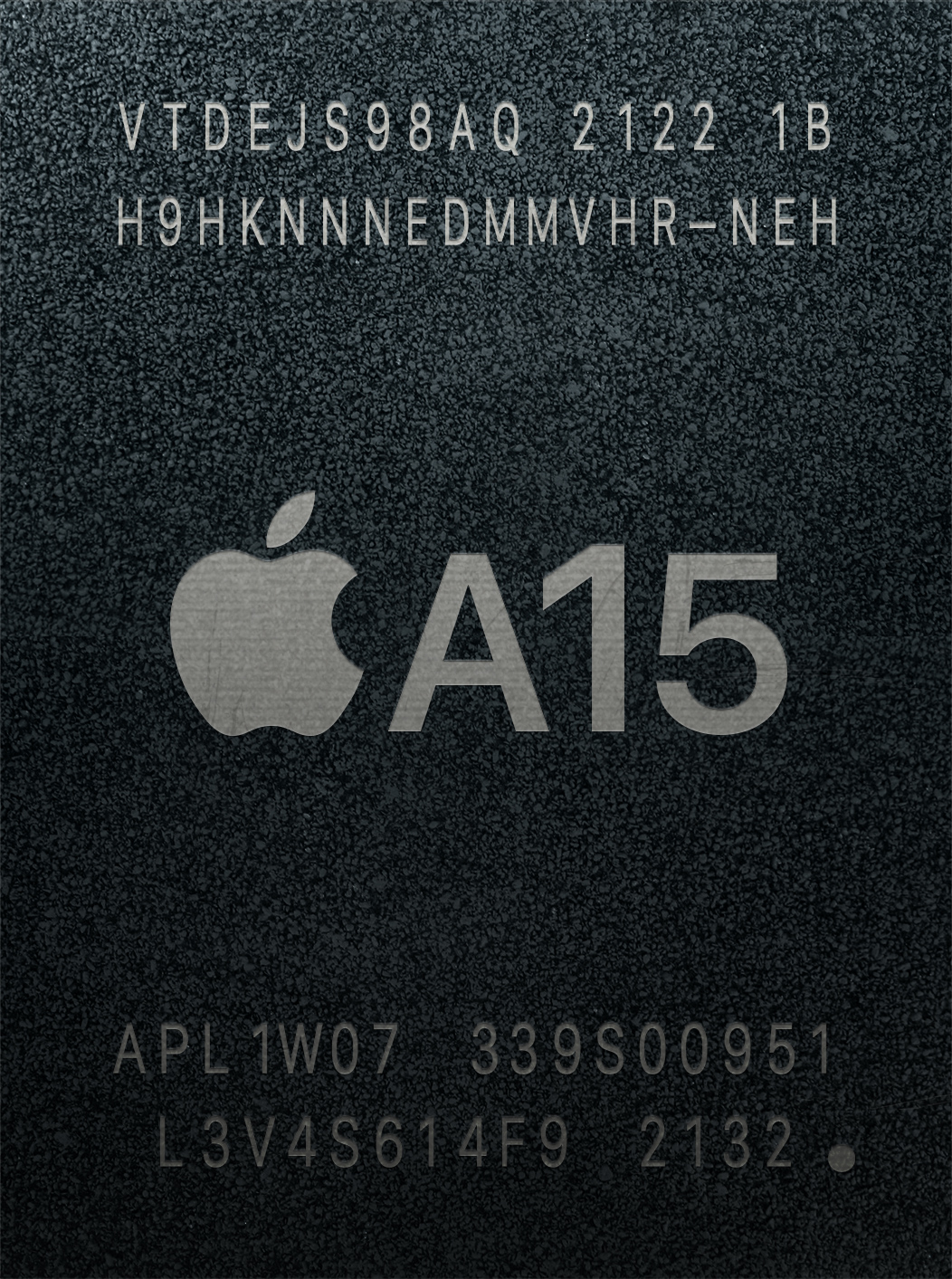 🇺🇸 United StatesApple A15 Bionic
Six-core ARM system on a chip for Apple mobile devicesSoC · Arm · 2021
🇺🇸 United StatesApple M3
Apple's 3 nm Mac and iPad SoC family with CPU, GPU and Neural EngineSoC · Arm · 2023
More from Apple Inc.
All of them 🇺🇸 United StatesApple M1 Ultra
Dual-chip workstation SoC with 20 cores and 114 billion transistorsSoC · Arm · 2022
🇺🇸 United StatesApple A17 Pro
First 3 nm mobile system on a chipSoC · Arm · 2023
 🇺🇸 United StatesApple M1 Pro
Professional ARM system-on-a-chip for Mac laptopsSoC · Arm · 2021
🇺🇸 United StatesApple M1 Max
High-performance ARM system-on-a-chip for professional MacsSoC · Arm · 2021