RCA CDP1861
Monochrome video display controller for the RCA 1802 microprocessor
Released in 1977 by RCA Corporation, the CDP1861 is a video display controller designed to support the RCA 1802 microprocessor. It enabled low-cost monochrome graphics on standard television sets using minimal external components and direct memory access.
- Released in 1977 for under US$20
- Displayed 64x128 monochrome pixels on TVs
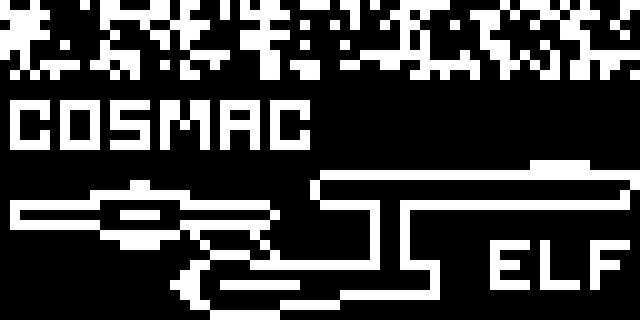
- Used in RCA Studio II and COSMAC Elf
- Required only 256 bytes for square pixels
What it is
The RCA CDP1861 is an integrated circuit that functions as a video display controller. Introduced in the mid-1970s by RCA Corporation, it served as a support chip for the RCA 1802 microprocessor. The device allowed early microcomputers to output black and white bitmapped graphics directly to standard television screens. It was notable for its low cost, requiring fewer than twenty dollars in 1977, and its ability to operate with very few external components. This simplicity made it a popular choice for hobbyist computers and early game consoles.
How it came about
Manufactured using low-power CMOS technology, the chip arrived in a 24-pin dual in-line package. It was designed to work seamlessly with the built-in direct memory access controller of the RCA 1802 processor. Early engineering samples carried markings such as TA10171, TA10171V1, and TA10171X. These preliminary part numbers appeared in production units like the RCA Studio II game console and Netronics Elf microcomputers. The system was often referred to as Pixie, particularly when paired with the COSMAC Elf computer.
Inside the chip
The controller generated monochrome graphics by mapping individual bits to pixels on the screen. At its highest setting, it displayed 64 pixels horizontally and 128 vertically. This mode required 1024 bytes of memory. Software could reduce the resolution to 64 by 64 or 64 by 32 to save space. The lower 64 by 32 mode produced square pixels and used only 256 bytes. This configuration was standard for the CHIP-8 programming environment. Because the video buffer shared space with program memory, users could watch data processing visually. A companion chip, the CDP1862, added limited color capabilities to the system.
How it was made
RCA Corporation produced the chip using a low-power complementary metal-oxide-semiconductor process. It was housed in a 24-pin dual in-line package. The design prioritized minimal external component requirements, which lowered the overall system cost. In 2004, a functional analogue named the Spare Time Gizmos STG1861 was created. This replacement used programmable logic devices and TTL chips on a small printed circuit board to mimic the original hardware for modern ELF 2000 builds.
Where it went
The chip powered several early microcomputers, including the Telmac 1800 and Oscom Nano. It was a central component in the COSMAC Elf, a popular kit computer for electronics enthusiasts. The RCA Studio II home video game console also utilized the CDP1861 for its visual output. Its ability to drive standard television sets made it accessible for home use. The low memory footprint allowed it to function in systems with very limited random-access memory.
Versions and family
A variant known as the CDP1864 was developed to support the PAL video format, while the standard CDP1861 handled NTSC. Early pre-qualification samples were marked with TA10171 series numbers. The CDP1862 served as a color generator companion but was not a direct variant of the display controller itself. Later, the STG1861 emerged as a modern recreation using different internal logic to replicate the original functionality for retro-computing projects.
Why it matters
The CDP1861 democratized video output for early microcomputers by eliminating the need for expensive dedicated monitors. Its integration with the RCA 1802 allowed for simple, low-cost systems that could still provide visual feedback. The chip played a key role in the popularity of the COSMAC Elf and the development of the CHIP-8 virtual machine. Its design influenced how early hobbyists approached graphics programming with severe memory constraints.

Questions people ask about RCA CDP1861
What resolution did the RCA CDP1861 support?
The chip could display 64 pixels horizontally and 128 vertically. It could also run at 64 by 64 or 64 by 32 resolutions to save memory. The 64 by 32 mode used 256 bytes and created square pixels.
Which microprocessor did the CDP1861 support?
It was designed as a support chip for the RCA 1802 microprocessor. It used the 1802's built-in direct memory access controller to manage the display of graphics on standard television screens.
Was the CDP1861 used in any game consoles?
Yes, it was used in the RCA Studio II home video game console. Early engineering samples with TA10171 markings have been found in production units of this console.
Good reading and sources
The facts on this page come from the Wikipedia article "RCA CDP1861", written by its contributors and used under the CC BY-SA 4.0 licence, and from its Wikidata record (CC0). EveryChip rewrote the text in its own words, with AI assistance, and compares every page with the article to make sure no passage is copied. It may be reused under the same CC BY-SA 4.0 licence with a link back.
It may contain mistakes, and figures change over time. Nothing here is investment or buying advice. If something is wrong, tell us. Last refreshed 2026-11-14.
Like RCA CDP1861
All analog, power and mixed-signal 🇺🇸 United StatesAY-3-8910
Three-voice programmable sound generator chip from 1978Analog · 1978
 🇺🇸 United States and 1 moreLM317
Adjustable positive linear voltage regulator integrated circuitAnalog · 1976
 🇬🇧 United KingdomZN414
Single-chip AM radio receiver integrated circuitAnalog · 1972
 🇺🇸 United States555 timer IC
A versatile integrated circuit for timing and pulse generation.Analog · 1972