Amiga Ranger
Unreleased prototype Amiga chipset with VRAM support.
Commodore International designed the Amiga Ranger as a successor to the original Amiga chipset between 1986 and 1987. It featured Video RAM for higher resolutions but was cancelled due to high component costs before release.
- Used Video RAM for 1024x1024 resolution support.
- Cancelled due to high VRAM costs in the 1980s.
- Designed by Jay Miner and the Los Gatos team.
- Supported 128 colors on screen simultaneously.
What it is
The Amiga Ranger was a prototype chipset developed by Commodore International. It served as the intended second generation of graphics hardware for the Amiga line, sitting between the original chipset and the Enhanced Chip Set (ECS). The project ran from 1986 to 1987 under the guidance of Jay Miner and the original design team in Los Gatos. Although fully tested, it never reached the market because the company deemed the cost of its Video RAM too high for consumer systems.
How it came about
Jay Miner began designing the Ranger after the Amiga 1000 launch. He aimed to create a highly expandable system that could compete with contemporary machines like the Apple Macintosh II. The team completed the design and testing before Miner left the company. They hoped Commodore would eventually release it. However, management rejected the prototype because Video RAM was significantly more expensive than standard DRAM at the time. This price difference made the chipset unsuitable for low-end models such as the Amiga 500.
Inside the chip
The chipset supported resolutions up to 1024 by 1024 pixels with a depth of 128 colors. It used a 7-bit color depth and maintained a palette of 4096 colors. A key architectural choice was the use of Video RAM instead of Dynamic RAM for the frame buffer. This provided the memory bandwidth necessary for high-resolution displays. The system could address up to 2 MB of this Chip RAM. The sound system likely remained unchanged from the previous generation, keeping the original 13-bit digital-to-analog converter.
How it was made
Commodore International manufactured the prototype units internally. The specific fabrication process node is not recorded in available records. The defining manufacturing characteristic was the inclusion of Video RAM modules. At the time of development, these components cost substantially more than standard memory chips. This economic factor prevented mass production. The technology later became viable when Video RAM prices dropped to within twenty percent of Dynamic RAM costs, influencing the subsequent AAA chipset design.
Where it went
No commercial products ever used the Ranger chipset. It existed solely as a development prototype. One known unit remains in the possession of Dale Luck, though its current operational state is unknown. The design goals targeted personal computers that required high graphical performance. It was intended to rival systems like the Sharp X68000 and the Macintosh II, which also leveraged Video RAM technology for improved display capabilities.
Versions and family
The Ranger had no official variants as it was never released. It acted as a bridge concept between the original Amiga chipset and the ECS. Some internal debates occurred regarding features such as built-in blitters per playfield, which were rejected by other engineers. The project eventually evolved into the AAA chipset initiative, which also remained unfinished when Commodore ceased operations in 1994. The Amiga 2000 represented a different expansion approach rather than a direct Ranger implementation.
Why it matters
The cancellation of Ranger marked a shift in Commodore's strategy toward cost reduction over graphical advancement. It delayed the adoption of Video RAM in the Amiga line until the AAA project, which itself failed to reach completion. The chipset remains a notable example of unused technology from the late 1980s. Its existence highlights the technical ambitions of the original Los Gatos team before corporate restructuring altered the product roadmap.
Problems and reception
Public reception was non-existent since the chip never shipped. Within the engineering community, it became a subject of legend and speculation. Some team members viewed it as a missed opportunity that could have kept the Amiga competitive against emerging rivals. Others noted that the project transitioned from a concrete design into a myth over time, with details becoming unclear as years passed.
Questions people ask about Amiga Ranger
Why was the Amiga Ranger never released?
Commodore cancelled the project because Video RAM was too expensive compared to standard DRAM. The high component cost made it unsuitable for their low-end consumer systems like the Amiga 500.
What resolution did the Ranger chipset support?
The chipset could drive displays at 1024 by 1024 pixels. It supported 128 colors on screen at once using a 7-bit color depth, with a total palette of 4096 colors.
Who designed the Amiga Ranger chipset?
Jay Miner and the original Amiga design team in Los Gatos, California created the chipset. They completed the design and testing between 1986 and 1987 before Miner left the company.
Good reading and sources
The facts on this page come from the Wikipedia article "Amiga Ranger Chipset", written by its contributors and used under the CC BY-SA 4.0 licence, and from its Wikidata record (CC0). EveryChip rewrote the text in its own words, with AI assistance, and compares every page with the article to make sure no passage is copied. It may be reused under the same CC BY-SA 4.0 licence with a link back.
It may contain mistakes, and figures change over time. Nothing here is investment or buying advice. If something is wrong, tell us. Last refreshed 2026-11-14.
Like Amiga Ranger
All graphics processors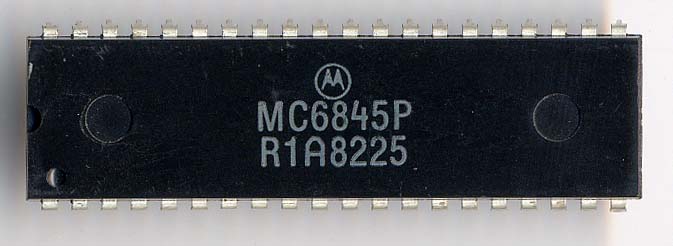 🇺🇸 United StatesMotorola 6845
Display controller for 1980s home computers and early PC graphics cardsGPU
🇺🇸 United StatesAMD FirePro
Professional graphics cards for workstations and servers by AMDGPU · GPU architecture
More from Commodore International
All of them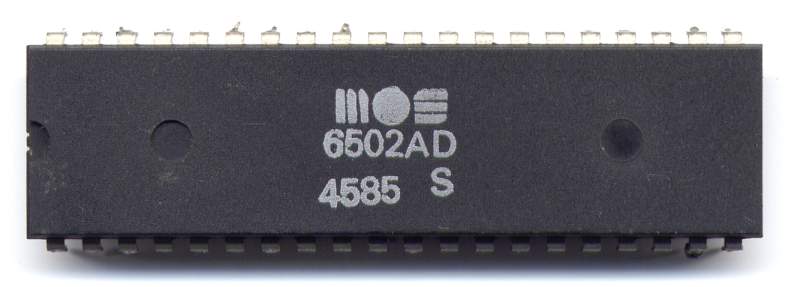 🇺🇸 United StatesMOS Technology 6502
An 8-bit microprocessor from 1975 that made cheap home computing possibleCPU · 8-bit · 1975
 🇺🇸 United StatesOriginal Chip Set
Custom chipset for early Commodore Amiga computersGPU · Other · 1985
 🇺🇸 United StatesCommodore REU
External RAM expansion modules for Commodore home computersMemory · 1986