68HC08
An 8-bit microcontroller series from Motorola and Freescale.
The 68HC08 is a family of 8-bit microcontrollers originally developed by Motorola Semiconductor. It maintains code compatibility with the earlier 68HC05 line and uses a von Neumann architecture. The series includes many variants for embedded tasks, ranging from basic control to USB connectivity.
- Fully code-compatible with the Motorola 68HC05.
- Uses von Neumann architecture and memory-mapped I/O.
- Includes variants with LIN and USB 1.1 support.
- Successor to the 68HC05 and predecessor to HCS08.
What it is
The 68HC08 represents a broad collection of 8-bit microcontroller units. Motorola Semiconductor created this line, which later passed to Freescale and then NXP. These chips serve various embedded applications. They share a direct lineage with the older 6800 processors. A key feature is full code compatibility with the preceding 68HC05 models. This allows engineers to upgrade systems without rewriting software. The architecture relies on memory-mapped input and output operations.
How it came about
Motorola designed the HC08 to succeed the 68HC05 family. The goal was to maintain software continuity while improving hardware capabilities. As ownership shifted from Motorola to Freescale, the product line expanded. Freescale introduced a simplified core called RS08 for low-resource needs. They also developed the HCS08 as the next evolutionary step. This progression ensured the technology remained relevant in changing markets.
Inside the chip
These processors use a von Neumann design, meaning instructions and data share the same memory space. The central processing unit contains five specific registers separate from main memory. These include an 8-bit accumulator for arithmetic, a 16-bit index register split into high and low bytes, a 16-bit stack pointer, a 16-bit program counter, and an 8-bit condition code register. Some commands can access parts of the index register individually.
How it was made
The family includes devices with pin counts ranging from eight to sixty-four. The physical packages vary to suit different application requirements. This flexibility allows the chips to fit into small sensors or larger control boards.
Where it went
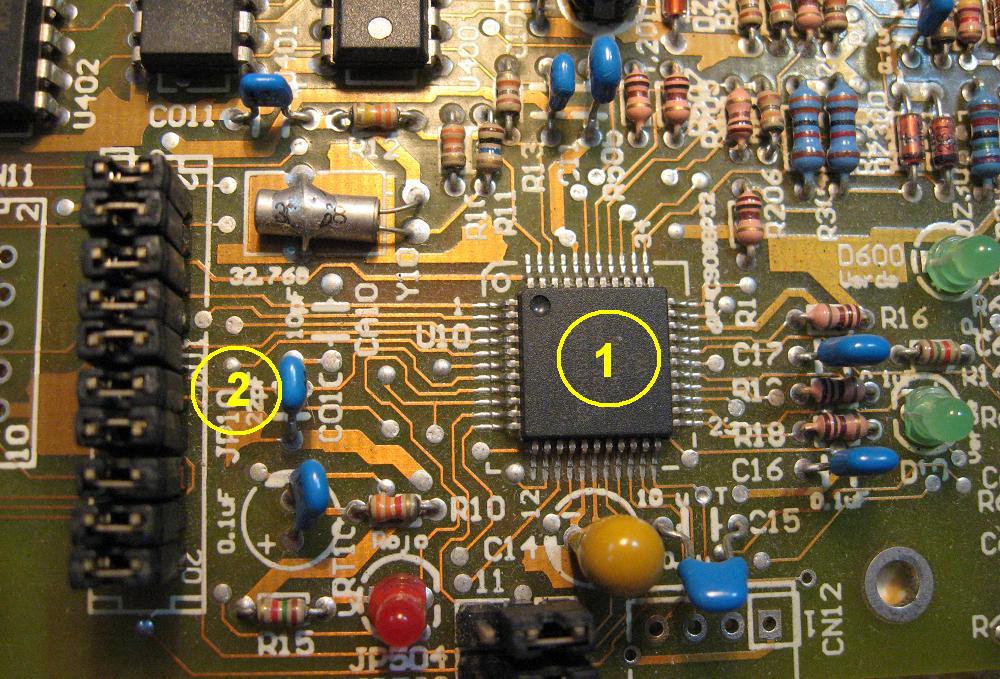
Engineers select specific HC08 variants based on the needs of their embedded systems. Capabilities differ widely across the dozens of available families. Some units support LIN connectivity for automotive networks. Others include USB 1.1 interfaces for peripheral communication. A common general-purpose example is the M68HC908GP32 model. These chips handle tasks in industrial control and consumer electronics.
Versions and family
The series comprises many distinct processor families. The RS08 core offers a reduced-resource option for simpler tasks. The HCS08 core serves as the successor generation. The M68HC908GP32 stands out as a typical general-purpose device. Each variant targets specific market segments with tailored features.
Why it matters
The 68HC08 established a strong presence in the embedded controller market. Its backward compatibility with the 68HC05 helped retain existing customer bases. The transition through Motorola, Freescale, and NXP kept the architecture alive. It provided a stable platform for developers needing reliable 8-bit control solutions.
Questions people ask about 68HC08
Is the 68HC08 compatible with older Motorola chips?
Yes, the HC08 family is fully code-compatible with its predecessors, the Motorola 68HC05 microcontrollers. This allows existing software to run on the newer hardware without modification.
What type of architecture does the 68HC08 use?
It uses a von Neumann architecture, where program instructions and data share the same memory bus. It also employs memory-mapped I/O for managing peripheral devices.
Who currently owns the 68HC08 product line?
The line was originally from Motorola Semiconductor, then moved to Freescale Semiconductor, and is now part of NXP. The technology has passed through these companies over time.
Good reading and sources
The facts on this page come from the Wikipedia article "Motorola 68HC08", written by its contributors and used under the CC BY-SA 4.0 licence, and from its Wikidata record (CC0). EveryChip rewrote the text in its own words, with AI assistance, and compares every page with the article to make sure no passage is copied. It may be reused under the same CC BY-SA 4.0 licence with a link back.
It may contain mistakes, and figures change over time. Nothing here is investment or buying advice. If something is wrong, tell us. Last refreshed 2026-11-14.
Like 68HC08
All microcontrollersMore from Motorola Semiconductor
All of them 🇺🇸 United StatesI.MX
ARM-based system-on-chip family for multimedia and embedded systems by NXP Semiconductors.SoC · Arm
 🇺🇸 United States68HC05
8-bit microcontroller family for embedded systemsMicrocontroller · 8-bit
🇺🇸 United StatesRAD5500
Radiation-hardened PowerPC processor for space systemsCPU · Power
🇺🇸 United StatesS08
An 8-bit microcontroller family for embedded systems.Microcontroller · 8-bit